The Harlan County Way

harlansgn

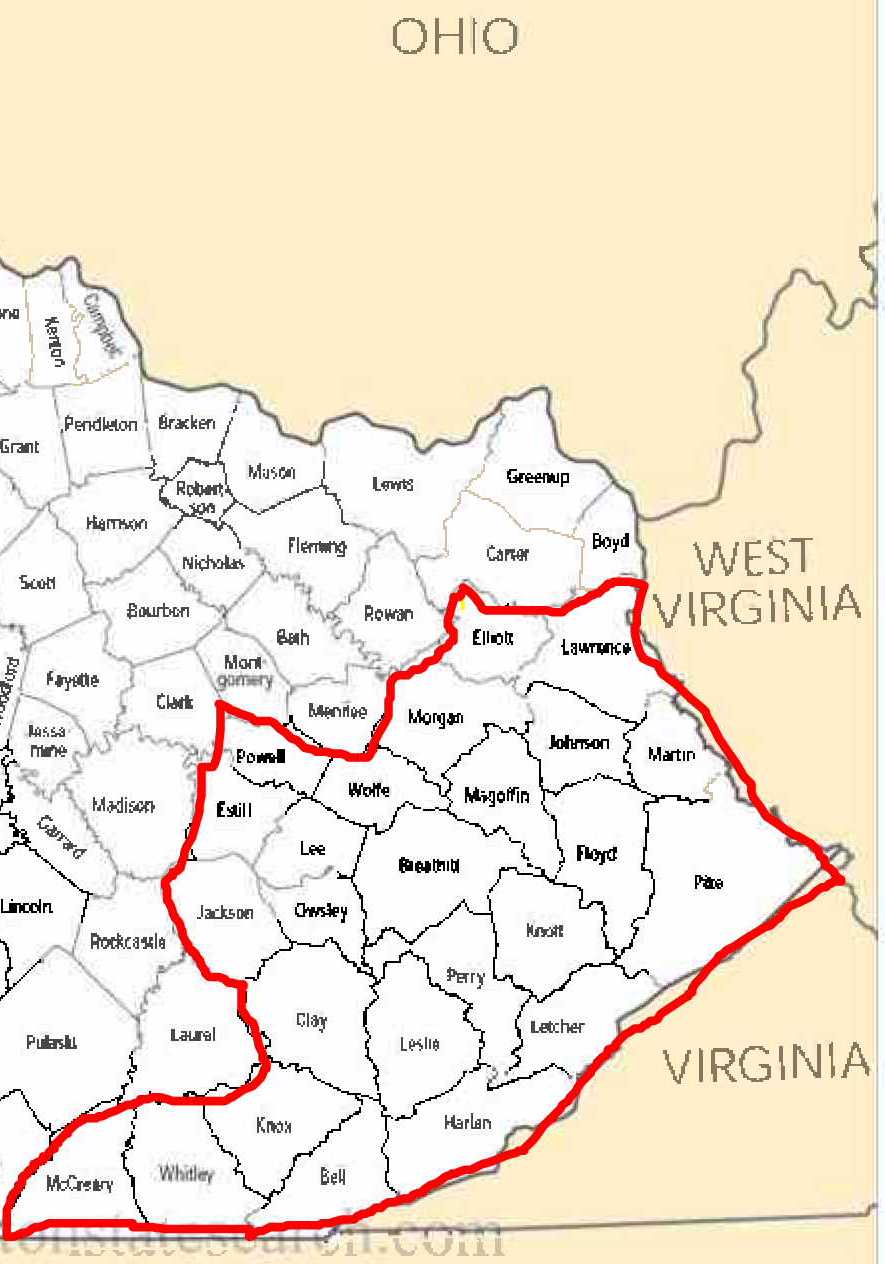
I grew up in Eastern Kentucky–born and raised as we say. What is Eastern Kentucky? I guess you’d call it a region or sub-region of Central Appalachia. It is not, as you might think, simply the eastern half of the great Commonwealth of Kentucky. Here’s my personal map of the area:
Kentucky_county_map2

This seemingly random boundary results in some folks calling it Southeastern Kentucky which, geographically speaking, is more accurate. A few notes:

  • We can’t include any counties on the Ohio River. They aren’t isolated enough. This excludes Boyd, Greenup, Lewis, etc.
  • I-64 runs through Montgomery, Bath, Rowan and Carter Counties. Again, they are excluded because of lack of isolation. Elliott County is an exception because–well–you just have to visit there to see.
  • Once you push too far north, you get out of the mountains, and we have to exclude you. Goodbye Fleming, Nicholas and Robertson Counties. Robertson County is the toughest to exclude. It definitely has an Eastern Kentucky feel to it, but it’s out.

The qualifications for Eastern Kentucky status include:

  • Mountains. You have to have mountains, not hills. Fleming County has beautiful, rolling hills, but they aren’t mountains.
  • Isolation. It has to be kind of tough to get there or at the very least it’s just on the way to somewhere else. Rarely is an Eastern Kentucky county a destination. On this criterion, Robertson County would qualify, but again, it’s just too far north.
  • Coal Mining. You need some coal mines, either now or in the past. We’re from coal mining stock.
  • Accents. You have to sound like us. Now, people in Carter County pretty much sound like us, but they have that Interstate.

I hail from Harlan County, the Eastern Kentuckiest of all counties. We’re isolated. Very isolated. Harlan County is not on the way to anywhere. If you need to go someplace that can be accessed through Harlan County, I guarantee that there’s an easier, quicker way to get there. Harlan–that’s what we call it–isn’t a destination, either. There aren’t any hotels to speak of, really. No Holiday Inn Express, Hampton Inn, etc. There are a couple of places to stay, and they’re okay. If you’re spending the night in Harlan, you probably have family there anyway.

We have mountains all around us.  We’re hemmed in.  We mine coal and have for over 100 years.  We also have accents, heavy mountain accents–the kind that can be indecipherable even to natives of the area.

I don’t live in Harlan now, but I’m still a Harlan Countian. Always.  So, I speak of how it was 30 years ago.  One of the great things about Harlan is that changes very little.  It’s still pretty much the same.

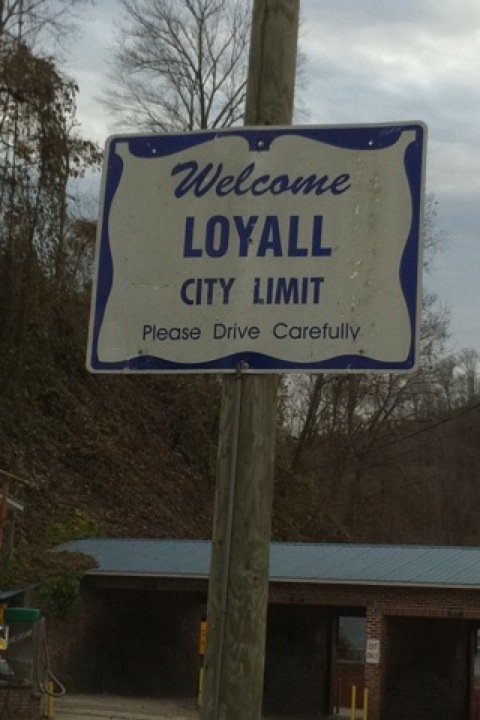
Now, don’t confuse Harlan County with the town of Harlan, our county seat. If someone tells you that he or she is from Harlan, they could mean any town from Pathfork to Holmes Mill to Cumberland to Cranks. Only if we’re talking to another Harlan Countian would we narrow the description to the town. Myself, I’m from Loyall which is three miles from the town of Harlan.
loyallsign

I’ll say I’m from Harlan, but don’t get confused. I’m from Loyall.

Unless you lived in the town of Harlan, you don’t go to the “city” schools–Harlan High Elementary and Harlan High School. I attended Loyall Elementary and Junior High and James A. Cawood High School. Cawood was named after James A. Cawood, long time Superintendent of the Harlan County Schools. None of my schools still exist. Now kids go to Harlan County High School which consumed Cawood, Evarts and Cumberland High Schools. We used to be territorial based on our schools. When we went to high school, we identified as being from Loyall or Hall or Wallins. We rarely hung out with anyone from Evarts or Cumberland–in those days, they had their own high schools. They might as well have been in different states.

WE ARE BAD

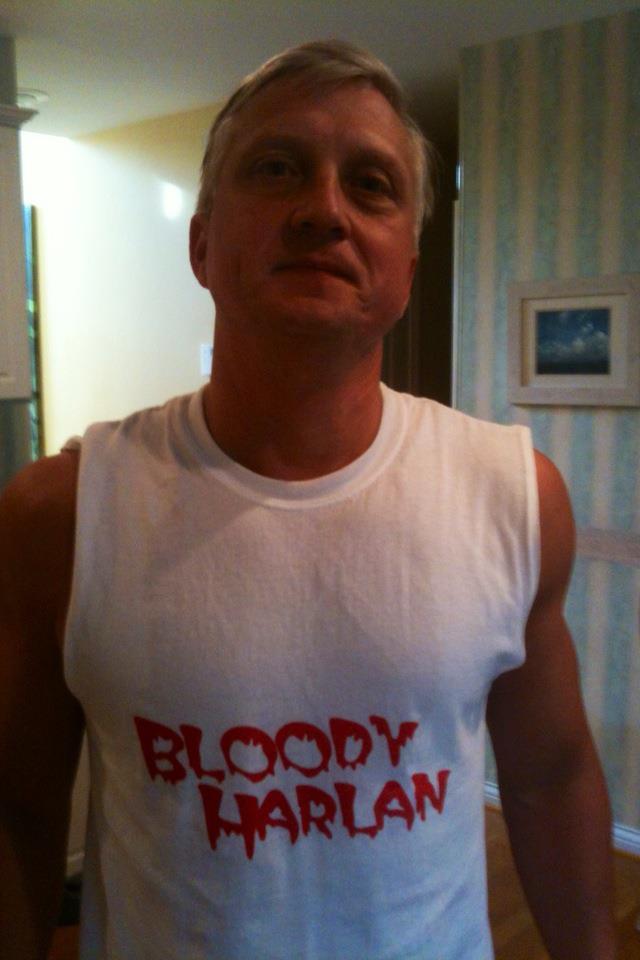
The vast majority of Harlan Countians are proud to be from Harlan. We are our own world. We like that it’s called Bloody Harlan by some folks even though that name is based upon events which occurred 70 years ago. Bloody Harlan is just badass. We like being the badasses of Eastern Kentucky.
bloodyjohn

Your author proudly claims his heritage.

Many people watch the FX series Justified. Justified portrays Harlan as a lawless frontier of wanton violence. Harlan Countians like Justified. We like people to think we’d kill them for some trivial reason.

Before Justified, many people got their image of Harlan from the award-winning documentary Harlan County USA which followed the Eastover coal mine strike at Brookside, Kentucky. Harlan County USA divides us into two groups: Those that love it and those that hate it. The ones who love it love the depiction of rough and ready union brothers and sisters ready to wage war with the coal company thugs. The rest of us (that includes me) hate the image of Harlan Countians as violent, uneducated hooligans. They point to the many fine folks in the county who were (and still are) horrified by the goings on at Eastover. The truth, of course, probably lies somewhere in the middle. The folks in Brookside were surely Harlan Countians as was the chief gun “thug,” Basil Collins. Basil was a neighbor of ours when I was a kid, so I know he was real. My mother drove through Brookside to go to work every day, so I also know the strike was real.  Harlan has always been divided into pro- and anti-union.  It still is in some ways, although it has been many years since the United Mine Workers Association held great sway.

That bastion of journalism, Hustler Magazine, once listed Harlan (the town) as one the three meanest towns in America. It was described as a place where people only smiled when they heard that someone had died. Harlan Countians did not like that. Not at all. I suspect it’s mostly because they didn’t care much for Hustler, at least not publicly.

Overall, we like the stereotypical portrayal of Harlan. Harlan is tough. Harlan is mean. Harlan is total badass.

Growing up, I didn’t feel particularly tough. Then, I moved to Lexington, Kentucky and found out that I was pretty tough by Lexington standards. For instance, threats didn’t faze me. I knew that truly dangerous people don’t threaten much. They just inflict harm. Of course, there’s a downside.  A mouthy little man like me finds out the hard way that bad is good, but big is better.  Bad and small isn’t a recipe for success.

WHO ARE WE?

Who are the Harlan Countians? Besides the accident of birth, we have certain commonalities:

  • We know that houses have winders and chimleys
  • We mispronounce light, fight, white and night.
  • We all know someone named Lonzo.
  • We have accents which are obscured by our penchant for mumbling.
  • We know at least one person who has been shot with a gun by someone else or by themselves accidentally.
  • We own guns.
  • We are related to at least one coal miner.
  • We say Papaw and Mamaw.
  • We know trash when we see it, and I’m not talking about garbage pick up.
  • We know at least one person whose mother was really their grandmother, and sister was their mother. Trust me on this one.

Harlan Countians can be found everywhere. Who are we?

  • The Stalwarts

These are the folks who stayed in Harlan. They are either Harlan by birth or moved there at a young age. They might have gone to college or joined the military. Regardless, they came back. Maybe they never left.

These are small town people just like in every small town. Small town life can be hard or easy. If it’s hard, it’s hopeless. If it’s easy, there’s nothing better. In that regard, Harlan is Small Town, USA. There are doctors, lawyers, accountants, teachers, coaches, laborers, deadbeats and criminals. There are good people and bad people. Like anywhere else, you have to hope to you don’t cross paths with the bad ones at the wrong time.

Among this crowd are those that my father called “off the grid.” He said we had a sub-culture of people “so far off the creek” that they weren’t plugged in to the modern world. That is certainly true, but I must say that those unfortunates (if that’s what they are) are the in minority.. They may be from such places as Shields, Jones Creek, Smith, Cranks, Punkin Center or Happy Top, although I can name you folks from all those places who have done quite well for themselves.

Harlan is no more defined by any subculture than Chicago should be defined by its sad history of public housing or New York by the worst of its slums. Yes, we have folks living in poverty–too many (as though there is an acceptable level of suffering) but most folks live just fine.

My parents were stalwarts. My Dad was born in Evarts and–expect for military service and college–never lived anywhere else. My mother moved to Harlan County from Pike County at around age 12 and never left except to attend college. They had no desire to ever live anywhere else. And they didn’t.

  • The Outlanders

I am an outlander. An outlander is someone who used to live in Harlan. We’re still Harlan Countians. We just live somewhere else. There are a lot of us spread over the country, but we still think of ourselves as being from Harlan. I haven’t lived in Harlan in 30 year, but if someone asks where I’m from, “Harlan” is the immediate response.

Some are like me. I went to college and had personal and professional opportunities that pulled me away. Others leave to find better opportunities.

We outlanders like our Harlan roots. It’s a kind of mountain street cred. If we meet anyone else from Eastern Kentucky, we can get instant acceptance with a simple “I grew up in Harlan.” Translation: “Despite appearances, I will kill you if necessary. So, watch your step.  I’d hate to have to kill you.  Just kidding–about the ‘hate’ part. I am a badass.”

  • The Pretenders

There are people who will pretend to be from Harlan or any place else in Eastern Kentucky. That’s right–they’ll pretend. They have cousins or in-laws or remote ancestors who hailed from the mountains. This, so they say, makes them mountain people. Of course, it doesn’t. We laugh at them but let them have their fun. They’re usually the folks who dream of turning all of Eastern Kentucky into a massive tourist destination by having all the people who live there pack up and move. Then, they can come back and pay admission to see where they used to live.

Sometimes, these people would show up to help us.  We were always suspicious of outsiders, especially those offering “help.”  We could tell if you were from Ohio or Michigan or some other exotic place.  You talked funny.  You weren’t one of us.  Go help someone else.

  • The Loathers

These folks are Harlan Countians, but they don’t like it. They might even live in Harlan, but it doesn’t suit them. It’s too dull. It’s boring. There’s nothing to do. There’s no future. It’s bleak. But they don’t always leave. They just hang around and complain.  Most of us pass through this phase at some point.  Many never leave it.

Some of these folks do leave Harlan–a lot of them, in fact. They go to other parts of the state or country and live as ex-Harlan Countians. They don’t like being from Harlan. They don’t want to sound like Harlan or look like Harlan. They pity Harlan. They know what’s best for Harlan, though, and won’t hesitate to tell you. Even though they know what’s best for Harlan, we don’t really like them.

WHAT WAS IT LIKE?

My children are fascinated and perhaps slightly horrified that I grew up in Harlan. Even though they have visited my homeland many times, they remain baffled by it.

Even though I haven’t lived there in many years, I still visit.  I’m fortunate that my job regularly takes me to Eastern Kentucky. Harlan is quiet, unless you grew up near the railroad tracks like I did. Then it was quiet except when the trains ran, which seemed like every 15 minutes or so.

Loyall had a school, a railroad yard, one stop light, a movie theater (at one time), the Corner Store (a genuine soda shop), a gas station, a barber and a couple of stores. A convenient store replaced the gas station and stores.  The school closed. All that’s left is the yard and that light.   We had our own post office, City Hall and fire station. They’re still there.   About 1,000 people lived there when I was a kid.  Maybe 700 or so now.  It was quiet then.  It’s quiet now.

We once had a train full of nerve gas pass through Loyall.  People gathered at the railroad tracks to watch it.  Why?  I don’t know.  Maybe they were hoping to see (or experience) some kind of catastrophe. Maybe they just didn’t have much else to do.

Sometimes you hear gun fire in the distance, but that’s in the woods. There aren’t running gun battles anymore like the famed Battle of Evarts many decades ago.  Oh, people still get shot occasionally but at much lower rate than we’d like you to believe.

The county is big, about 50 miles across, but sparsely populated. Like much of Eastern Kentucky, the population has declined for decades.  One can argue that it’s always been over-populated what with the chronic high unemployment and high poverty rate.

The “first of the month” is a big time in Harlan. That’s when people get their checks. Government checks. Disability checks. Welfare checks. Food stamps, too. Town is flooded with people. When I was young, the Government Cheese truck looked like a scene from an African relief mission. People were practically hanging on it. Although we certainly weren’t poor, Government Cheese is excellent, and my Dad would get us a block whenever he could. I miss Government Cheese.

We only periodically had a movie theater, the fabulous Margie Grand in Harlan. It would occasionally be condemned but re-open at some point. It was an old theater whose best days had long past. Plaster would fall from the ceiling and you could throw popcorn on the stage in front of the screen and watch the rats scurry out to eat. It was tough to find two functioning seats together. It reeked of Pine Sol. It was a movie experience like no other. Sometimes, the film would jam and you could watch it melt.  It even had an old balcony where–rumor had it–black folks used to be seated. Loyall also had a theater–the Roaden–until I was about 6 years old. For many years now, Harlan has had a multi-screen cinema. Sweet.

Mostly, we didn’t do much, because there wasn’t much to do. Oh, you might go to Gary’s Lounge and Roller Rink sometimes. Gary’s was a fun place. One side was a roller rink. The other side was the Lounge, a long, narrow open room with a dance floor. A friend of mine once drank a beer from a girl’s cowboy boot at the Lounge. You don’t see that every day.

Mostly, we just hung out. Funny thing is, that’s what my kids do, even though they live in a small city with a million things to do. I guess teenagers everywhere just hang out. Oh, and we moaned and complained about not having anything to do. My kids do that, too.

IT’S NOT ALL GOOD

When I went to college, I befriended other Eastern Kentuckians. One guy said we were like Indians who left the reservation. Even though I had been lots of places, leaving Harlan took me out of my comfort zone. Honestly, it took me years to adapt. I went from a county of about 35,000 people spread over 1,000 square miles to a campus of 20,000 + crammed into a few blocks. No wonder I was overwhelmed.

Since I’ve been gone, Harlan–like all of Eastern Kentucky–has been devastated by prescription drug abuse. We didn’t have that problem when I lived there. If we had a problem like that today in my slice of Suburbia, there would be a full-blown panic. Now, sadly, it’s a way of life in the mountains.

Coal mining runs in cycles.  Right now, it’s in a big down turn.  That hurts everyone.

There is a bleak side to Harlan, as anywhere else. Like inner cities, there are generations locked into a poverty cycle. Some escape, but most don’t. There has always been tension between those who work and those who don’t or won’t. Nothing will get a hard-working coal miner or school teacher fired up like a discussion about those “drawing a check.”  That’s how it was when I was a kid, and it hasn’t changed.

We also suffer from stereotyping.  Our teeth aren’t all that bad, although mine aren’t great.  We didn’t all drink Mountain Dew as babies.  I’ve never known anyone who didn’t wear shoes–and I knew some pretty rough characters.  I knew no one married to his own sister and just a handful married to their cousins.

We’re also the last of a breed–and this applies to all of Appalachia. We’re the last group that can openly derided.  We can be called ignorant, inbred, genetically inferior, toothless, shoeless–you name it.  If you do so, you won’t be called a bigot or a phobe of any type.  You might even become a best-selling author or reality TV producer.

My life is very much divided into two parts–before and after Harlan.  Now, far in the past, at least until I visit.  Give me about 30 minutes, and it’s like I never left.  That’s pretty cool.

If you live in Harlan, I can’t say that I blame you. If you don’t, I can’t fault you for that, either. It’s a nice place. Different, but nice. If you don’t believe me, I just might have to kill you.

©thetrivialtroll.wordpress.com 2013

Why I Loved Carnivals

Last night, I saw a lady at the store who looked like a carnival performer I once saw.  When I was young, I loved carnivals.  REAL carnivals.  I’m not talking about something your church does as a fundraiser and calls it a carnival.  I’m also not talking about a circus.  A circus is a completely different thing.  A carnival is, well, a carnival.  Cotton candy; funnel cakes; rickety dangerous rides; sketchy employees; rigged games; cheap prizes; rough, flinty women; side shows; and a land armada of trailers where the workers live.  A carnival rolls from town to town spreading joy and not a small amount of trepidation when it arrives.

I grew up in Harlan County, Kentucky.  We had carnivals, usually at least once a year.  The Guthrie Shows was the big one.  The Shriners sponsored it.  It would set up in the parking lot of one of the local high schools for a week.  Ray Guthrie was from Middlesboro, Kentucky and would roll his carnival all around Southeastern Kentucky.  We loved it.  There was also Myers Midway–excellent, too.

I’ve written before about how wrestling brought out the real Harlan Countians.  The carnival brought our everyone.  It created a vast melting pot of our small corner of Kentucky.  You could see people from Holmes Mill to Pathfork at the carnival.  When I was in high school, some friends and I stood in line for a ride behind some stereotypical Harlan Countians.  Trying to get a rise out of them, we began to complain loudly about how bored we were and shouldn’t have vacationed in Harlan.  A woman turned around, cigarette in the corner of her mouth, and said:  “Who sent you here fer a vacation?  All we have here are back stabbins, back shootins and cooooold-blooded killins!”  She wasn’t from the Chamber of Commerce.

When I went to college, I would still go to carnivals, albeit not quite the same as in Harlan.  Lexington, Kentucky has the yearly Lions Bluegrass Fair.  It has evolved into more of a state fair atmosphere over the years, but–in the 1980’s–it was pure carnival.  It was the Guthrie Shows on steroids.  Good stuff.

Why the love of carnivals?  Let’s see…

CARNIES

As most folks know, carnival workers are called carnies.  They are a singular subculture.  They have a grizzled, dangerous look about them.  They set up the carnival, operate the rides and run the games.  It’s not a carnival without the carnies.

They often have missing digits or limbs.  This doesn’t stop them from doing their jobs, of course.  They’ll pull the lever to start the Tilt-A-Whirl with that one good arm with a smoke dangling from their lips.  Sometimes, they’ll have an eye missing.  Do they wear patches or buy glass eyes?  Of course, not.  They just leave a gaping hole or simply sew the eye shut.  They’re carnies.  I saw a carny with a lame arm.  He just had it strapped to his side.  You don’t see that outside the midway.

Carnies fascinate me.  What is life like for them?  They live in their trailers at the carnival.   I imagine them drinking rot gut whiskey and playing cards far into the night, perhaps stabbing someone.  The romance of it all is intriguing, but it probably sucks..

CARNY BLOOD

My Dad’s Uncle Jay was a carny for many years.  Jay’s wife, Aunt Ruth, was a fortune teller.  They were true carnies. I believe they may even have lived in Gibsonton, Florida at one point.  Gibsonton is famed as the Winter home of carnies and sideshow performers.  Such luminaries as Lobster Boy and Percilla the Monkey Girl called it home.

Jay was a barker.  The barker is the guy who yells at you when you walk across the midway trying to get you to waste your money on something.  After he retired, Jay came back to Harlan for a visit.  As luck would have it, a carnival was in town.  Jay went to the carnival and ended up staying there a week.  Carnies all know each other.

My parents once visited Jay and Ruth in Florida.  They were told that Jay’s house had a “big palm” in the front yard, as one might expect in Florida.  As my parents drove down the street, they spotted it.  Yes, it was big palm–a hand identifying the home of Madame Ruth, Fortune Teller.  True carnies.

Once Ruth was trying to find Jay who was, apparently, wont to disappear on occasion.  She came to my Granny’s house demanding to know his whereabouts.  Granny responded with:  “Why don’t you look in your crystal ball?!?!”  Granny wasn’t impressed with carnies.

CARNY TOWN

I grew up in Loyall, Kentucky, which had a bit of a carny flavor to it.  No, it’s not because the residents looked like carnies, although a few surely did.  It’s because there was a family in town that owned and repaired carnival rides.  One member of that family was my younger brother’s baby sitter.

The patriarch of the clan was “Hoss,” a man whose girth no doubt led to his nickname.  He had rides and parts of rides all over his yard.  For a brief time, he even had a small Ferris Wheel.  My little brother loved that house.  The best days at the baby sitter were when he would come home and say “I played with Hoss today.”  Hoss also had an even more imposing son called “Mighty Moe,” but that’s a story for another time.

When I was small, that house was a wonder to me.  Why did they have all those rides in their yard?  I thought they were part of a carnival.  I was a tad disappointed when I found out they were just regular people.

THE FREAKS

Real carnivals had side shows or, as they were called in less politically correct times, Freak Shows.  I know that we’re not supposed to call people freaks.  It’s just not good form anymore.  That is, however, what they were called.  I didn’t come up with the term, so don’t assail me for using it here.

220px-Freak_show_1941

You don’t see this much anymore

Sonograms and evolving human decency have largely destroyed the Freak Show as an art form.  Modern medicine has also played a part in limiting the numbers of qualified entertainers.  Surely, the Elephant Man and the Mule-Faced Woman would receive at least some rudimentary medical care before their conditions became acute.  In days past, these unfortunate folks had little else to do but turn to the world of side shows.  It’s not like they could work in service industries.

If you want a good look at this bygone world, rent Tod Browning’s classic film, Freaks, made in 1932.  It stars real sideshow performers such as Prince Randian The Living Torso, Johnny Eck The Half Boy, Josephine Joseph and Zip The Pinhead.  It was so disturbing at the time that Browning had difficulty even finding theaters to show it.  It was banned entirely in England.

freaks

Prince Randian and Johnny Eck, stars of Tod Browning’s Freaks

I will confess that I have attended several freak shows.  This is nothing of which to be proud, but it’s true.  I’ve seen many of the typical freaks, such as Blockheads.  A Blockhead is a person who will push a nail straight into his face just beneath his nostril.  It’s gross, but anyone can do it if he or she is will to poke a hole in their face.  It’s more of trick than it is pure freakiness.

blockhead

Typical Human Blockhead in Action

Here are my personal Freak Show highlights:

Helga The German Giantess

I saw Helga at a carnival in Lexington, Kentucky.  She was billed as The World’s Largest Woman.  The sign claimed that she was OVER 7 FEET TALL!!  I was with a couple of friends, and we were intrigued.  We paid our money and were led to a dingy tent where Helga sat on a shabby throne.  She wore a long, black dress and a tiara.  I’m not sure how old she was, but I would have put her in her late fifties.  It’s really hard to say what with her being a giantess and all.

She held court and prattled on about her adventures.   Then, she stood up.  I don’t know if she was really seven feet tall (they cleverly had her sit on an elevated stage), but she was big.  REALLY big.  Maybe 6’8″ and a good three bills.  She asked for a volunteer from the audience.  There were 6 or 7 people in the tent and some young fellow raised his hand.

The volunteer made her look even bigger, because she was about a foot taller than he was.  She held out one of her gargantuan hands and ask him to hold it.  My friends and I squirmed at the thought of it.  On her hand, she had a ring with a large fake diamond (I say fake, because if it had been real, I doubt she would have been toiling in a Freak Show).  He took her hand with all the enthusiasm of someone meeting a leper.  Helga then boomed:  “MAKE A WISH!!”  Then, she took a step back and hiked her dress up to her navel.  The giantess wore not a stitch of under-clothing.  She dropped her dress and said “DID YOUR WISH COME TRUE?!?!”  For some reason, this terrified us, and my friends and I fled from the tent.

More disturbing was that one of my friends kept saying we should go look for her trailer.  We said “no” and slowly backed away from him.

THE LSD FREAK

I saw her in Harlan when I was a kid.  She sat on the floor of a tent, chained to a post.  She held a baby doll in one hand and drooled.   The story was that she had been a normal college girl until a “bad trip” turned her into the LSD Freak.  Now, she was a dangerous lunatic who had to be chained up.  The barker said that if she escaped she would kill everyone.  I didn’t believe that, because her condition appeared more catatonic than psychotic.

Now, she wasn’t a real freak, not in the classic sense.  She was probably the wife or daughter of one of the carnies, but she disturbed me.  Why?  Because I wondered–even as a kid–about what kind of bad turn one’s life could take for that to be your job.  The Elephant Man had little choice in regard to his profession, but this was something else entirely.

I felt sorry for her and the whole lot of them.  But, I never forgot it.  So, it must have been a good show.

BLOCKHEAD EXTRAORDINAIRE

As noted above, Blockheads aren’t really freaks.  They’re just people willing to do something weird.  Like a sword swallower (which I’ve also seen, by the way).  I’ve seen several Blockheads, but one stands out.

Again, I was kid, maybe 10 or 11.  This guy was billed as “The Human Blockhead.”  He came through the back of the tent and was an unimpressive sight.  He might have weighed 130 pounds.  He was pale and somewhat unhealthy-looking, perhaps the pallor of someone who lives in a trailer behind a carnival.

The Blockhead disinterestedly pushed a nail into his face.  People gasped.  Then, he breathed some fire.  Ho hum.  He walked in box of broken glass with an apathy that made me think he really wouldn’t care if his feet got shredded.  He laid on a bed of nails.  Yawn.  Then, he did it.

A couple of guys set up two folding chairs while The Blockhead lay in the dirty floor. The two men picked him up.  He was stiff as a board.  They placed the back of his head on one chair and his heels on the other.  He was still perfectly straight.  A cinder block was placed on his stomach.  He didn’t budge.  This was an impressive feat of strength.  THEN, one of the guys picked up a sledgehammer and–BOOM!–smashed the block!  The Blockhead just bounced up and back down like a steel beam. He was still perfectly balanced on the two chairs.  The guys picked him up and laid him back in the floor.  He stood up, took a bow and left with the same apparent ennui with which he entered.

I was there, and I saw it.  It wasn’t a trick.  They smashed a freakin’ cinder block with a sledgehammer on his stomach! I don’t know how he did it, but he did.  I hope The Blockhead went on to bigger and better things.  I doubt it, but I hope so.

FOOD

I can’t discuss carnivals without mentioning the food.  Corndogs, funnel cakes, cotton candy, snow cones and all manner of other food you wouldn’t eat anywhere else.  Everything that can be deep-fried is deep-fried.  And it’s all good.

There are still carnivals, although they are somewhat sanitized now.  Oh, you’ll still see a two-headed calf or dwarf on occasion.  There might even be babies in jars somewhere out there (Truthfully, I hope this one has been permanently eliminated).  You might even see a blockhead.  They still have all the crooked games on the midway, but I was never a fan of the games, anyway.  Some folks still have freak shows, like The Jim Rose Circus.  For the most part, though, the carnivals have lost their flavor.

Carnies remain the same–sketchy, dangerous and forbidding, but the rides seem safer.  I guess decades of litigation took care of that.  I haven’t been to a carnival in years, but I don’t think I can top what I’ve already seen.  Why try?

©thetrivialtroll.wordpress.com 2013
The Wonderful World of My Mother

I have written here before about my Dad. Twice in fact. He was an interesting, quotable character and a fine, fine fellow. Great father, too. I haven’t yet written about my mother. Until now.

Why not? It’s not because she wasn’t a fine person. She was. Certainly, it’s not because she wasn’t a great mother. Of that, there is no doubt. The reason, I think, is because–unlike Dad–she is difficult to capture in words. But I’ll try.

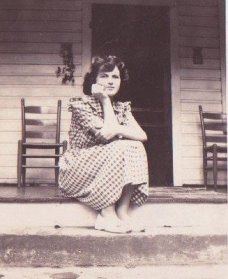
Mom died in 2003. Her life was probably unremarkable by most standards. She was born on January 19, 1930 in Detroit. (Coincidentally, my father shared the same birthday, being born in 1925). Her parents were in Michigan, because my Papaw was looking for work. Shortly after her birth, they moved back to Eastern Kentucky. She grew on Island Creek in Pike County and in Cumberland in Harlan County. She graduated from Cumberland High School and then Lincoln Memorial University in Harrogate, Tennessee in 1951. After a year of student teaching at Benham High School, she taught at Evarts High School in Harlan County for the next 30 years. She was a Home Economics teacher. She married my Dad in 1957, and they stayed married until her death. They had three sons, of which I am the middle one.

Mom in 1945 in Cumberland, Kentucky

Mom in 1946 in Cumberland, Kentucky

She had a brilliant mind. After her retirement, she became something of an expert on investing and taxes. She was my primary financial advisor. If my Dad was the engine that drove our family, Mom was the brains of the outfit.

She survived breast cancer and the resultant toxic chemotherapy, although she suffered neurological damage from the treatment which left her with a bizarre set of symptoms for the remaining 20 years of her life. She also weathered the death of her youngest son. Overall, she had a life like most folks–ups and downs, good time and bad times.

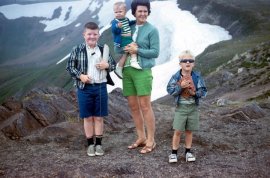
A rare photo of Mom with all three sons.  Your author is on the right.  Note my dutiful older brother holding the purse and bottle.

A rare photo of Mom with all three sons. Your author is on the right. Note my dutiful older brother holding the purse and bottle.

She was, by turns, funny and sad; inspiring and discouraging. She could make me angry enough to yell at her (which I would NEVER have done with Dad) and the next moment be kind and thoughtful. She was generous and genuinely tried to let me know that she cared. She probably wasn’t different from a lot of mothers in that regard.

What made her different, at least to me, were the things she said, the stories she told and the myriad eccentricities to which we all became accustomed. To give you a better picture, I’ve decided to share some of those:

HAZARDOUS WARNINGS

Like most mothers, Mom had a vast library of cautionary tales which were repeated over and over and over…. Here are some of the classics:

Poor Cousin Stubby: Around the 4th of July, I would hear about Mom’s cousin, who lived in Chicago at some time in the distant past. He was just called her “cousin.” If he had a name, I’ve long since forgotten it. Cousin had a penchant for setting off dangerous fireworks. One year, he set off some particularly deadly explosive and “BLEW HIS FINGERS OFF.” That’s how it was always described to me. Not one finger, mind you (which still seems unlikely, unless he was playing with blasting caps). In my child’s mind, this meant every, single, damn finger. My little mind imagined Cousin fumbling about for the rest of his life with his stubs–all because of fireworks. Some years later, a short-fused firecracker went off in my hand. Other than making my ears ring and slightly burning me, it was no big deal. Oddly, I was a little disappointed at the lack of maiming. Just a little.

I actually did have a cousin who cut off his finger in a door. He was never presented as any kind of example. He was just an idiot.

The Medicine Cabinet Moron: We lived in a house with an old-fashioned bathroom. It had a steel tub and steel sink with a medicine cabinet over it. The toilet probably used about 10 gallons of water per flush. As a lad, I would climb onto the sink to access the medicine cabinet. This was, as Mom taught me, one of the most dangerous stunts a child could pull.

It seems there was a boy in an unspecified part of the world who also liked to climb on sinks. Coincidentally, he was about my age at the time. Sadly, he lacked my sure-footedness and fell while reaching for his medicine cabinet. He crashed to the floor, cracking his head on the tub. The result? “BRAIN DAMAGE!” No, he didn’t just split open his head. He had BRAIN DAMAGE. As a result, as Mom said, he became a moron. Not only that, but he was also a “VEGETABLE.” THAT, my friends, is a bad deal. I am now 50 years old. A few weeks ago, I was at my in-laws house (which is very similar to my childhood home). I looked at their medicine cabinet and could not help but glance at the tub to satisfy myself that there was enough distance between the two to prevent a moron-inducing fall. Oh, I didn’t climb on the sink. But I thought about it.

The Boy Who Made Out With The Toaster: I have had a lifelong habit of looking at myself any time I pass a mirror. This isn’t because I am particularly handsome. It’s just a habit. My Dad did the same thing. When I was small fellow, I used to look at myself in the side of the toaster. I know that’s weird, but the toaster had a dent in it, and you could treat it like a fun house mirror. Besides, I just liked doing it, okay?

There was once this boy who, like me, stared at the toaster. One day–for reasons I didn’t understand–he kissed his own reflection! Much like Narcissus, he was done in by his own beauty. How, you say? By ELECTROCUTION. That’s right, he was electrocuted. Immediately. Dead. Just like the other kid who tried to get his toast out with a fork. D-E-A-D.

Here’s a secret: After she told me that, I kissed the toaster. What the hell? Life on the edge. Don’t tell anyone about that.

To this day, when I see a shiny toaster (you know, the silvery chrome kind), I’m tempted to plant one on it just to see. I don’t. Usually.

Sputum: If Mom saw me touch the bottom of my shoe–even for a split second–she would say “Oh, there is nothing filthier than the bottoms of your shoes. You have walked in people’s sputum.” Not spit. Nor phlegm. Not even snot. Sputum. When I got older, I would do it just hear the word sputum. She’s the only person I ever heard say it.

THE CATCH PHRASES

Mom had a habit of saying the same things over and over about particular people or situations. I considered these to be her catch phrases. This is best described by the following examples:

Social Disgrace: This was something to be avoided at all costs. A social disgrace would bring shame upon your family name. Divorce was a good one. Marital infidelity was another. Getting arrested was a biggie. Mom’s description was “Honey, you know that’s a social disgrace.” I’ve done my best throughout my life to avoid these.

The Lowest of Trash: One big step below a social disgrace was behavior reserved “the lowest of trash.” This behavior included drinking, drugs, premarital sex, children born out-of-wedlock, foul language, poor grammar, bad table manners and general trashiness. Normally, this was used as follows: “Honey, the lowest of trash wouldn’t do a thing like that.” Often, a woman who looked like a “floozie” would be used as a living example of the lowest of trash.

Stomped-Down Moron: To be a stomped-down moron may or may not involve social disgrace or the lowest of trashiness. All it required was poor judgment. Then, Mom might observe that “You act like a stomped-down moron.” This is not to be confused with a brain-damaged moron.

As an aside, Dad once observed during an argument with Mom: “Anna, I know that it’s important for you to get the last word, but you’re the only person I know who has to get the last scathing insult in any conversation.” Stomped-down moron fell into that category.

He Wears A Diaper: My parents knew a man who became involved with a much younger woman. It was a social disgrace, of course. This guy was about Dad’s age, and the gossip horrified Mom. Naturally, she talked about it all the time. Every time it came up, her description of this fellow included this tagline: “He wears a diaper.” WHAT?!? Evidently, this fellow had suffered some sort of hideous medical condition or that’s what folks said, anyway. As a result, “He wears a diaper.” Sometimes she would say “You know he’s incontinent. He wears a diaper.” Did he? Who the hell knows? How would Mom know this? I have no idea. It’s not like he was a close family friend. He was just some guy they knew. I doubt that he ever told Mom he wore a diaper. Regardless, his name was never mentioned without reference to his diaper.

Some years later, I happened to be in Harlan on business. I was at the Hardee’s and guess who I saw? Diaper Dandy! We exchanged banal pleasantries. I must admit that I checked him out for any tell-tale signs of diaper-wearing. You know what? I think that man was wearing a diaper.

The Ugly Man: Mom went to college with a man so ugly, so repellant that he was denied admission to medical school. This man was so hideous that the mere thought of exposing him to the sick and infirm was a shock to the senses. Since Mom was quite a few decades too young to have attended school with Joseph Merrick, the famed Elephant Man, what could this man’s affliction have been? Bad teeth. Yep, poor dental work. So bad–or “deformed” as Mom always said–that he couldn’t cover them with his lips. It seems to me that if you couldn’t cover your teeth, the lack of saliva would cause them to rot. Maybe they did or maybe he licked them frequently. Either way, it had to be really gross. I tried to envision this man’s appearance, his grotesque twisted teeth protruding. By the way, I’ve seen a lot of ugly doctors. Think about how bad this guy had to be.

THE ECCENTRICITIES

Mom had a number of peculiarities or eccentricities or whatever you want to call them:

Car Sickness: Mom usually got car sick when she opened the door of the car. Sometimes, she would just puke in a plastic grocery bag. (Oh, the word “puke” is only said by the lowest of trash). Other times, you’d have to pull over to let her “get some air.” Once, we when she was a child, her father drove their family from Pikeville to Cumberland, Kentucky. When asked at the gas station how far he had driven, Papaw replied: “Nineteen pukes.” Normally, when my parents came to visit my home in Lexington, the first thing Mom did upon arrival was go to the bathroom and vomit. My wife thought it was odd, but I was so used to it that I rarely even noticed.

Camera Shyness: I suspect that there are more photographs of Howard Hughes and J.D. Salinger than there are of my mother. She hid from cameras like you were the Paparazzi. She would turn her head, hold up her hand, run from the room–anything to avoid the camera. Future generations will wonder why we have so little photographic evidence of her existence.

I took this photo of Mom in 1990.  She is telling me to leave her alone.

I took this photo of Mom in 1990. She is telling me to leave her alone.

Burning Paint: She had no sense of smell or at least that was the claim. There was one notable exception to this malady: She could smell burning paint–and she often did. It was like a super-power. Unfortunately, she would smell it when it wasn’t present. Or maybe it was but only her heightened sensitivity. “John, do you smell that? I smell burning paint.” There was never any burning paint, as far as I know. Then again, I don’t know what burning paint smells like.

The Pre-Planned Funeral: A lot of folks pre-plan their funerals, but not many do it without the help of a funeral home. Mom did. Shortly before her death, she gave my brother detailed plans, including a budget. No embalming (“It’s not required and a waste of money.”) We followed her instructions with one exception. We didn’t tell the funeral home to get all the gold out of her mouth (“They’ll steal it, if you don’t.“). But someone might have:

After Dad died, I found these in a jar.  They were Mom's.  Maybe Dad fulfilled her final wishes.

After Dad died, I found these in a jar. They were Mom’s. Maybe Dad fulfilled her final wishes.

THE TALES OF WOE

Mom had a vast reserve of maudlin stories, most of which involved her childhood. Here are the best–and most repeated–ones:

Jitterbug: She had a dog named Jitterbug. I don’t remember what kind of dog it was. Here’s what I do remember: Jitterbug go run over by a train or a big truck or something like that. It was horrific. The story had a tremendous build up of how wonderful and loved Jitterbug was. Then, he got killed. I hated that story.

The Bracelet: When Mom was a girl, her father bought her a bracelet. She got mad at him one day, took off the bracelet and threw it at him. He weeped. He didn’t cry or sob or tear up. He “weeped.” That’s how it was always said, like a Bible verse: “Daddy weeped.” My older brother so hated this story that he refused to listen to it after a while. (Dad, being cynical as he was, observed “Can you imagine what a cheap piece of junk that bracelet was?”) Nevertheless, Mom never got tired of telling it.

Poor Little George: Mom’s Uncle George was about the same age as she was. He had some kind of awful liver disease. He died when he was 8 years old while his parents were driving him to a specialist somewhere. This is a legitimately sad story. The kind of story best told once. Once.

Papaw: My grandfather–her father–was one of the finest people I’ve ever known. Kind, caring–just a nice guy. He did, however, have the cardiac history of Fred Sanford, having suffered innumerable heart attacks. Mom would recount some of those to me telling me how he barely survived each. Once, he had one while working underground in a coal mine. Again, he barely cheated death. My Dad’s version was much different: “When we got to Cumberland, your Papaw was flaked out on a lawn chair listening to a transistor radio. He didn’t look too sick to me.” Papaw later moved to Utah and any time we visited him, he cautioned that it could well be the last time we saw him. He reminded us of that, too. He died in 1998 at age 91. Oh, and I never knew him to have a heart attack.

So, that’s Mom. It’s easy to say you love your mother. I did, but I also liked her. She was funny. She cared about what happened to me. She always tried to help. She rarely raised her voice. In her later years, I don’t think she could yell. She spoke barely above a whisper, often prefacing her comments with “Oh, Lord, honey…”

When my younger brother died, sadness infected her like a bad cold she couldn’t shake. She got better but never well. Even with that, she was a good mom and grandmother. She is greatly missed but left me with a lot of good memories.

©thetrivialtroll.wordpress.com 2012

Harlan County Halloween

It’s that time of year again. Halloween! All the kiddies will dress up and go door-to-door trick or treating. Some of us adults will dress up, too. There are Halloween parties for young and old. I suppose there are even Satan worshipers who use this time for their high holy days.

It was only when I moved to Lexington did I hear a lot about Halloween as a Satanic rite. Maybe there were kids I knew growing up who couldn’t trick or treat because of its Hellish undercurrents. The only kids I knew who couldn’t trick or treat were Jehovah’s Witnesses, but they weren’t allowed to do anything.

Despite the many urban legends, Halloween is generally safe for young and old. People don’t put razor blades in apples or needles in candy bars. In fact, my cursory research reveals that there has never been a reported case of such maleficence. The only case of someone poisoning candy was some demented freak in Texas who poisoned his own kids. By the way, if you do think it’s safer for your kids to trick or treat at the mall, I suggest you go the mall and take a look at the human flotsam and jetsam loitering about. I don’t know what your neighborhood is like, but mine doesn’t look like a casting call for Jersey Shore II . Nevertheless, at 50 years old, Halloween takes me back to my youth, to the nostalgia of a simpler time.

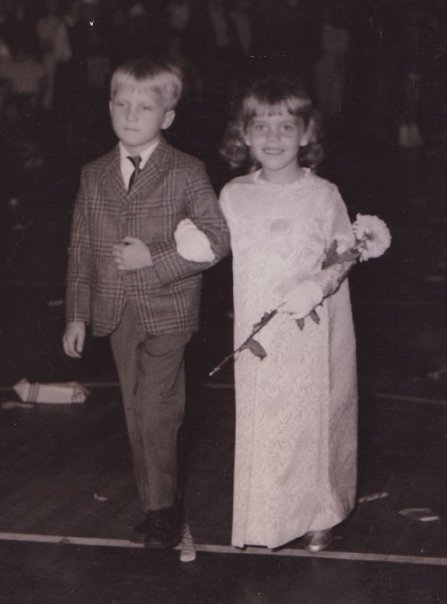
I grew up in a Loyall, Kentucky, a small town in Harlan County. Halloween was a big deal in Loyall. Churches had Halloween parties. Our school had a Halloween Carnival. I even escorted the Halloween Princess one year. Alas, I was never either Prince or King of the Carnival, although my younger brother managed to salvage some of our family’s good name by become Prince. To become Prince or King, one had to raise the most money. After my humiliating defeat, my parents made sure my brother faced no such shame.

Your author’s enthusiastic appearance as the 2nd Grade escort for the Halloween Princess.

We enjoyed trick or treating. I lived in a small neighborhood with the exotic name of Rio Vista. It was, in fact, aptly named as we had a view of the Cumberland River, especially when it flooded. Rio Vista consisted of five small blocks of houses and was a trick or treat Nirvana.

We would run around the neighborhood collecting our candy and having a generally good time. Other than the occasional soaped window, we didn’t have much “tricking.” One year, a friend of my brother wrote “WALLACE FOR PRESIDENT” on our front door with a crayon. That wasn’t vandalism, as much as it was a political statement. In fact, the trickster told my Dad he did it. He didn’t want anyone else taking credit.

I don’t remember ever being afraid to trick or treat. We knew most of the people around us. There was one lady who handed out political literature instead of candy. We just skipped her house. There was also one lady I thought was a witch. I never walked by her house anyway, and I damn sure wasn’t taking a chance on Halloween.

As I got older, I realized that the rest of the county was different from my little world. Tree-cutting, for example, was very popular. You would cut a tree and drop it in the road to screw up traffic. Another more daring version involved cutting the tree almost in two and then pushing it down in front of an on-coming vehicle. Oh, how one would laugh at the ensuing carnage. The final–and most deadly version–was to drop the tree ON a passing vehicle. I don’t know of that actually happening, but I’m sure it did. Watts Creek and Jones Creek were two popular areas for this version of “tricking.”

My first personal experience with this difference was in my teen years when a friend and I–being past trick or treat age–decided to walk through Loyall on Halloween night. Without warning, we were caught in an egg-throwing crossfire which left us dazed and eggy.

For reasons long since forgotten–at least by me–someone once threatened to kill me on Halloween. Why did he choose Halloween? Maybe he quite reasonably–though mistakenly–assumed it was legal on Halloween. Suffice to say it didn’t happen.

In October of 1978, shortly before Halloween, I took my driving test for my license. The officer giving the test was an affable fellow, well-known around the county. He wasn’t so affable that day. When my Dad asked him how he was, he responded: “I’m getting ready for this damn Halloween. If I had my way, they’d outlaw that damn night. Declare martial law and arrest anyone out of after dark. As far as I’m concerned, shoot everyone out after dark.” He went on the explain that it was the most difficult night of the year for the police in our county. 75 additional state troopers had to be brought in to handle the lawlessness. As example, he cited a relative of his (it might even have been his brother) who lost an eye for an errant egg throw. I’m not sure I agreed with his Judge Dredd system of justice, but he had a point.

Halloween in Harlan County in the 1970’s and ’80’s went well beyond handing out candy and soaping windows. Our people took it as a night to abandon all semblance of order, to engage in random acts of vandalism and violence not seen during the rest of the year. It was an anarchist’s holiday.

One of my high school teachers was equally adamant about maintaining order on All Hallows Eve. One day, he addressed our class about his concerns. Below is an approximation of what we were told:

Some of you boys know where I live. Last year on Halloween, we had a house burned near us. I’m warning you that I’m not putting up with anything from now on. Anyone sets foot on my property, and I’ll be waiting with a shotgun. I’m not going to kill you. I’m going to unload a twelve gauge shell full of rock salt on you. I’ve done it before. It blows out of the barrel like burning sand. It won’t kill you, but you won’t soon forget it.

That was one house to be avoided at all costs. He lived near an area called Pathfork where the tales of Halloween excess were legendary. His precautions were understandable. Did I mention that he was also a preacher?

My favorite story is a somewhat apocryphal tale right out of Loyall. One of our denizens was well-known for his lawless behavior. For example, he was notorious for huffing lighter fluid, so much so that the local stores wouldn’t sell it to him. He would tie his shirt over his face and soak it with lighter fluid. As you might expect, he was prone to erratic behavior.

In any event, one Halloween, he dropped a toilet from the top of the bridge in Loyall. A toilet. Here is the Loyall bridge (long since torn down) as it looked at the time:

The “x” marks the spot from where a toilet was dropped off this bridge in Loyall. The approximate direction of its path is shown by the red arrow.  

As this photo shows, getting to the top of this bridge was no simple task. Now, I know that this young man could do that, because I had seen him walking on top of the bridge on many occasions. He would climb (or crawl) up the angled supports at the front of the bridge. But, to climb to the top carrying a toilet seemed to defy human capabilities. You might be impressed with that guy who parachuted from space, but I’m still more fascinated by this.

Oh, I should clarify that it was only the bowl part of the toilet. He did not drop the tank, too. This does not make the story any less fantastic. In fact, that is the kind of detail that gives the story the ring of truth.

Why did he do this? Where did he get a toilet? How on Earth did he climb with it to the top of the bridge? Did he intend to drop it on someone? If so, did he realize that it would likely instantly kill that person? I still hope that this story is true. It may well not be, but I hope so..

Then, there were the burnings. I’m not talking about mundane things like bags of excrement or pumpkins, although we had our share of that. I’m talking about houses. Every Halloween, I heard tales of house burnings–real and threatened. I don’t understand how going door-to-door in costumes morphed into felonious acts of violence, but that’s what I heard. Like a lot of stories in Harlan County, they may have been exaggerated.

You may wonder if anyone got killed on Halloween. Not so far as I know. If they did, it probably wasn’t Halloween-related. Nowadays, many people get their image of Harlan County from the television show Justified. I’m sorry to report that, at least in my day, we weren’t stacking up corpses like cord wood. Regardless, I don’t think the kill rate increased on Halloween.

One time in study hall in high school, a guy told me he was going to hang a guy on Halloween, thinking that he could get away with it. I don’t think he did it. He did, however, pull a dog’s teeth one time. You read that right. Nothing funny about that. That’s not too far from a lynching. I’m sure an FBI profiler would agree that it shows a certain willingness.

Even when I was in college, I took precautions. Halloween was on a Friday one year. I made sure NOT to go home that weekend, lest I be driving through the county after dark.

So, if you’re annoyed by trick or treaters, just think: Someone could be burning your house or cutting down your trees or dropping a toilet on you. Happy Halloween!

©thetrivialtroll.wordpress.com 2012

Going Green

I’m going green. That is to say that I might go green. It’s all the rage. President Obama is all for it. All my liberal friends want me to do it. I have tiny feet–the size of matchboxes–but I compensate for that with a gigantic carbon footprint. I like the environment, but if you’ve read this blog before you know I’m not a mountain man. I like the seasons, except for Fall and Winter. Fall is like a really crappy appetizer just before an even crappier meal.

So, I guess I should go green. Maybe I will, but I have some reservations.

Green isn’t usually associated with anything appealing. I hate eating greens. To be green with envy is bad. If you’re green as a gourd, you don’t know anything useful. Have you ever aspired to be a greenhorn? Of course not. Ever see someone sick in a cartoon? Green-faced. Green teeth are really gross, unless you’re talking about Old Green Teeth from Charlie Daniels’ classic, Uneasy Rider. Even Kermit the Frog sang that It Isn’t Easy Being Green. Indeed.

There is good green stuff, too. St. Patrick’s Day and the wearing o’ the green. I’ve drunk green beer. It was just like regular beer but made for really gross vomit. The Jolly Green Giant and the Hulk seem cool (although being associated with gigantism might be bad). Money is green, and I like money. But, when you take a close look at it, it’s not really all that green.

Where I grew up, we had the Harlan High School GREEN Dragons. I guess there were all kinds of dragons–red, black, brown and green. The city of Harlan must have been crawling with dragons at one time. I didn’t go to Harlan High School. I went to James A. Cawood High School. We were the Trojans, named after, of course, condoms. By the way, since folks at Harlan High School always thought they were better than us county kids, I’m sure someone will offer an explanation of why being the Green Dragons is a sign of their socioeconomic and intellectual superiority. Save it. Truly, no one cares. You’re from Harlan County. The rest of the world thinks you’re a toothless hay shaker, too. But, I digress.

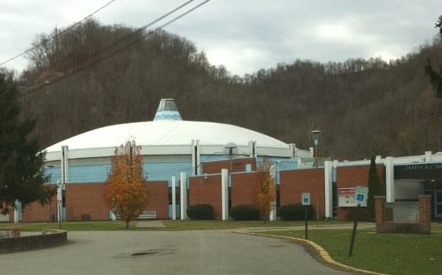
James A. Cawood High School. Home of the Trojans. The gym was called the ConDome but only by me.

Back to being green. I think I have to go off the grid. In other words, I have to live like an animal but without any animal skills or instincts. Either I have to make my own electricity or do without. Doing without is a non-starter. I like TV. TV requires electricity, as does the Internet.

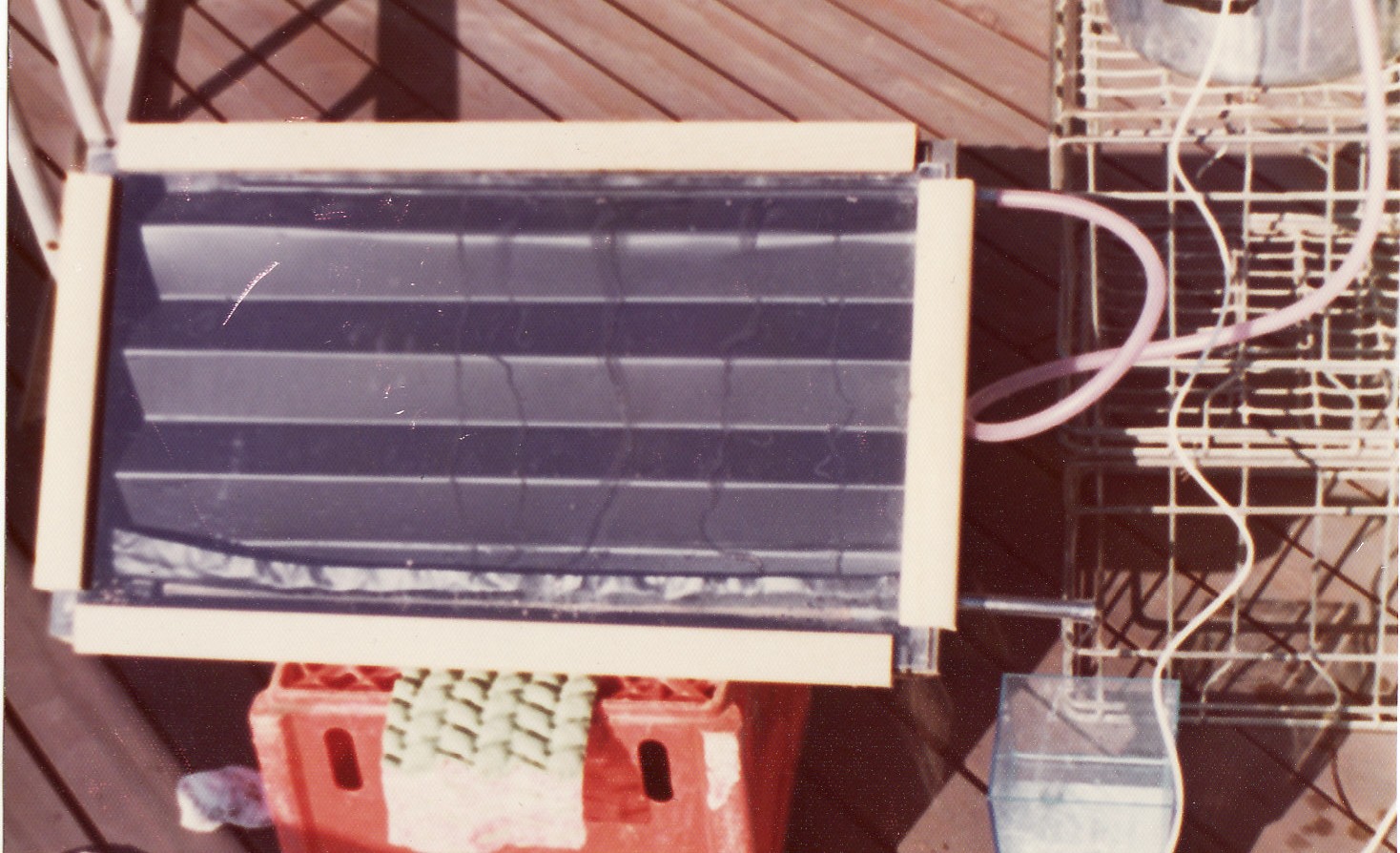
I don’t know how to make electricity. I guess I could use solar energy, if I knew what the hell to do with it. When I was in the 7th grade, I built a solar water heater for a science project. Actually, my brother designed it. I just built it. That’s a lie, too. He built it. I watched, though. It worked, if you consider the ability to turn cold water into tepid, room temperature water “working.” Like many inventors, I remain bitter at corporate America for crushing my innovation.

Actual photo of solar water heater I invented in the 1970’s. Note lukewarm water pouring out of the pipe on the lower right side.

I could build a windmill, I suppose. Then what? How do I hook it up to my TV? Would I have to live inside it like Frankenstein’s Monster? He didn’t really live in one, but he did die in one. I have no interest in that. Would I be like Don Quixote and think it was a dragon–a GREEN dragon, no doubt? You know what windmills are good for? Killing birds. I could have plenty to eat, depending on what kind are killed. Power lines kill a hell of lot more birds AND have the added advantage of cooking them in the process. Once again, green isn’t necessarily better.

There goes my TV!

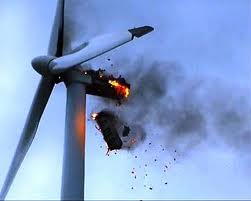
Windmills also catch on fire sometimes, which would scare the hell out of me, especially if I’m living in one (see comments RE: Frankenstein’s Monster above). The biggest problem is that the wind doesn’t blow all that much around here, and Kentucky is near the bottom of states in “wind potential.” I want my TV.

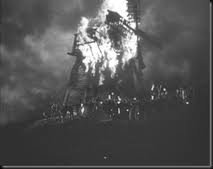
The sad fate of the typical windmill dweller.

Toilets. I like indoor plumbing and flush toilets. The TOTO Neorest 600 is on my bucket list. I’m not composting human waste. This one is non-negotiable.

The Neorest 600. Life at its best.

Cars. This is another tough one. I like cars. Not just any cars but ones with internal combustion engines. Maybe I could drive an electric car, if they didn’t cost so much. Plus, none of them look cool. I can ride a bike, but bike riders annoy me. They jam up traffic, run stop signs and generally get in the way. Plus, they’re all on the dope. No thank you, Mr. Armstrong.

Then, there’s flying.  I fly on occasion, and I’m sure that’s not green.  I assume that burning huge amounts of jet fuel isn’t eco-friendly.  We used to have green air travel.  Airships, massive floating palaces.  They were like flying ocean liners.  They also did this:

The joys of green air travel. The landings could be tough.

I’ll pass.

Maybe I should just get a green job. I’m lawyer, and it’s not all that green, I suppose. I produce massive amounts of paper which kills trees and fills landfills. I use lights and computers. I drive a car–a lot. Maybe I should just buy an old manual Royal typewriter and set up my office in my bird-slaughtering, flammable windmill. Unfortunately, this would substantially reduce the green which I value most–$$$$.

At one time, I considered setting up an eco-friendly mammogram business to provide much-needed health care screening while reducing one’s carbon footprint. It never took off. I’ve still got my cardboard box with two holes cut out in it, just in case.

If you’ve read other posts of mine, you know I work in the coal industry. If you’re green, you think I’m evil, that I hate the environment and want to control the weather. Not true. I like the environment. I just don’t like being out in it all that much. If you do, more power (coal power, of course) to you. I’m happy for you. Almost everyone I know in the coal business likes to hunt and fish or play golf. That’s being green.

Oddly, many green people are not all that green themselves. They are downright dirty. They are brown. Don’t be brown if you’re green. Bathe regularly. Really bathe, too. Don’t do something like soak in a pool of your own urine (or anyone else’s, for that matter) or roll around in composted human waste and call that bathing. If I go green, I’m still showering quite a bit.

Green folks are very sensitive. Generally speaking, they don’t like to be made sport of. They get enraged, in fact. They get red in the face (not green). They tell you that you are awful for not being green, too. It’s like a form of racism. Imagine if you organized protests demanding that everyone be white. But…but…THAT’S NOT THE SAME THING!! some greenie screams about right now. Well, no it’s not. Not even close. I just said that to make them mad. See how easy it is? I once enraged a hippie with this blog. Hippies are green. Some greenie will get hair-lipped about this post. Lighten up. Not with lights, mind you. Those take electricity.

I guess I’m not meant to be green. My kids do have a penchant for not flushing the toilet. They’re not green, either–just nasty. I recycle at work, but the Byzantine rules about what stuff goes where are so confusing that it’s just not worth it.

If you’re off the grid, I salute you. Of course, if you are, you’re probably not reading this unless you’re staring over the shoulder of someone at Starbucks. If you’re also “brown,” that person knows you’re standing there on account of the green smell.

I don’t feel too bad. The green folks I know drive cars, fly in jets and use electricity just like I do. That’s not a criticism. I understand. We need all that stuff. Kermit was right. It isn’t easy being green.

©thetrivialtroll.wordpress.com 2012

Hunting Big Foot

This should read “Loyall, Home of Big Foot.”

I grew up in the Golden Age of Big Foot–the 1970’s.  I also grew up in the Land of Big Foot–Harlan County, Kentucky. I realize that the proper spelling of the species is “bigfoot,” but I prefer “Big Foot,” as his proper name.  I never saw Big Foot, but he was around, lurking.

Some 40 years later, my contemporaries ponder the state of the World.  They grieve over politics and social issues.  They worry about such mundane topics as prostate health and cardiovascular disease.  I, however, still think about Big Foot.

Eastern Kentucky has always had its share of tall tales.  There was Old John Shell, reputedly living to the ripe of old age of 130.  He killed a bear with his bare hands in a creek.  Thus, that creek is now known as Greasy Creek from the grease left by the bear’s carcass.  My Papaw used tell of a headless man who roamed the woods in Island Creek in Pike County.

We now live in a new era of Big Foot.  He’s making a comeback.  The History Channel used to be devoted to subjects like war–you know, history.  Now, it has shows about Big Foot.  Big Foot is on the Science Channel, The Learning Channel and others.   He’s a star again.

I first became familiar with Big Foot’s cousin, The Abominable Snowman.  The Abominable, of course, was one of the stars of the classic Christmas special, Rudolph the Red-Nosed Reindeer.  He terrified me, even after Hermey sadistically pulled all his teeth.

I learned of the real Abominable through a magazine article–it might have been in Boy’s Life.  Someone had made plaster casts of his foot prints. They were huge!  He had to be real.

It was around that time that I first heard of Big Foot.  He might be known as Sasquatch elsewhere, but in Harlan County, he was–and will always remain–Big Foot.  Harlan County had Big Foot.

To be precise, Loyall had Big Foot.  Loyall is where I grew up.  It was–and is now–a small town.  For years, the sign into town said “Population 1100.”  I guess that was right.  I don’t know how long Loyall has been there, but I’d guess since 1911, the year the first trainload of coal was shipped out of Harlan County.

Loyall is a railroad town, home of a railroad yard.  Originally, it was the Louisville & Nashville Railroad.  Today, it’s CSX.  The “Yard” is huge, full of old relics and buildings which haven’t been used in decades, but it still runs trains.  It seems like most folks in Loyall worked for the railroad.  My uncle Jack was the Trainmaster at the Yard.  He made sure the trains ran on time–literally.

The Loyall Yard, many years ago. It looks pretty much the same today.

I lived most of my childhood in Rio Vista, a subdivision of sorts just outside Loyall.  It was 5 blocks of houses and a nice, quiet place to live.  Nice neighbors, you slept with your doors unlocked, etc–typical small town USA.  The only downside was that we lived right by the railroad tracks–as did most folks in Loyall.  Even today, I’m sure I could sleep soundly right by a train track.

Just outside Loyall is a mammoth cemetery, Resthaven.  That’s where my parents and younger brother–and many others–are interred.  Near the cemetery was a curved railroad bridge, which I was told was the first curved railroad bridge in the country.  I doubt that, but I like to think it’s true. So, Loyall was pretty ordinary.  Our biggest claim to fame was being saluted once on Hee Haw.

Even though Loyall was ordinary, it had its mysteries.  For example, there was Good Neighbor Road.  For the most part, it was just a little road at the foot of Park Hill lined with houses.  After about a half mile, the road ran out and turned into dirt.  People lived on that stretch, too, but I don’t know who they were.  Their dogs were vicious and would chase you like a pack of wolves.  Past those few homes was the sewer plant.  Past that was a big old house full of people.  We didn’t know them or what they were about.  A friend of mine and I used to go into the woods above that house and look at it with binoculars.  It looked like the house in The Texas Chainsaw Massacre.  We never saw anything interesting going on, but it was still creepy.  We knew they were up to no good.  My knew those folks and said they were alright.  I’m sure he was wrong about that.

Then, there was Old Loyall which really was no different from “new” Loyall except that’s where the Yard was located, and I guess it was older.  It’s also where City Hall and the fire department were–and still are–located. But, on the other side of the Yard was a strange stretch of road running behind the Yard.  In the back of the yard were a couple of old school buses with stove pipes in the windows.  People lived in those buses.  At least, I think they were people.

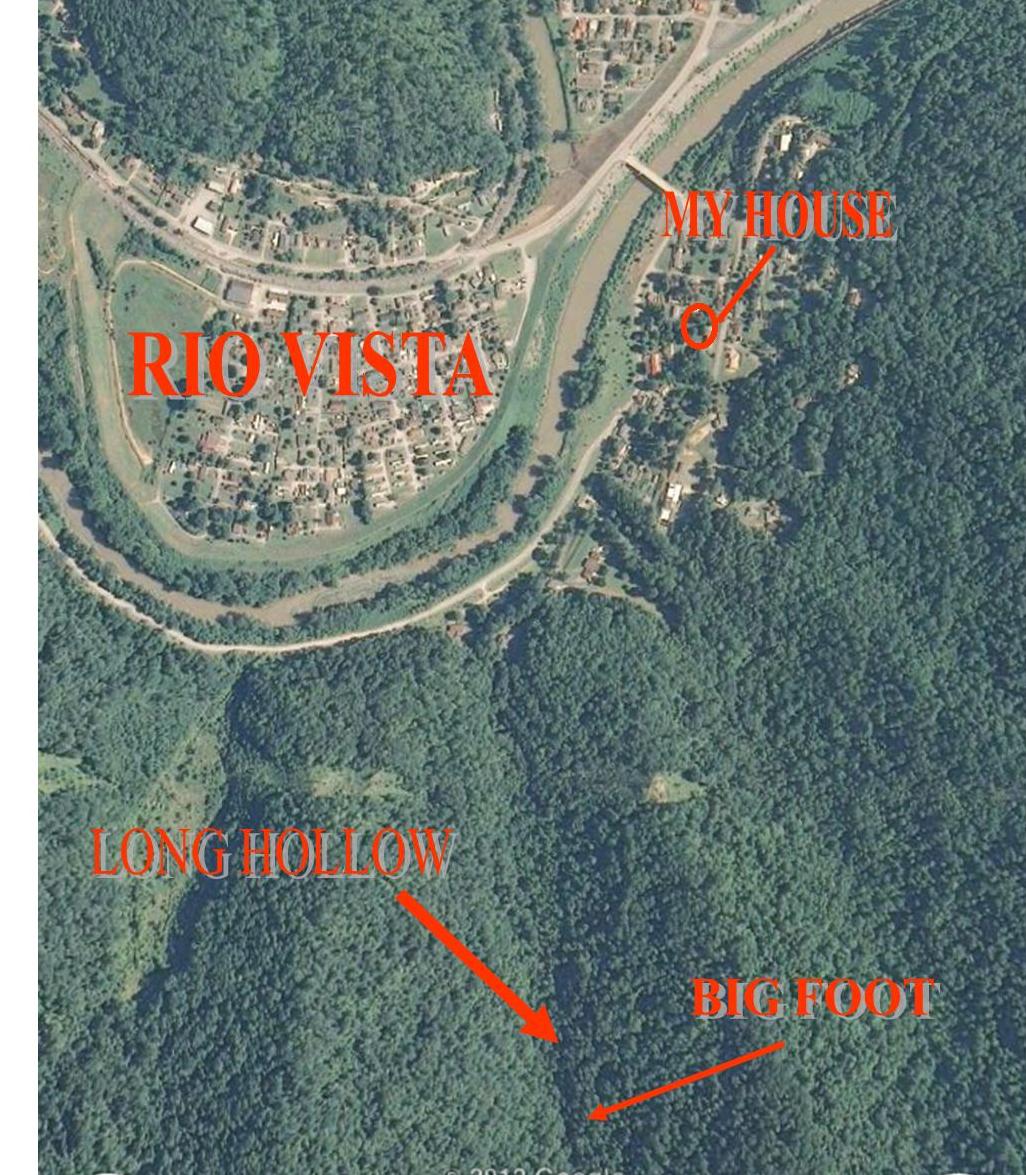
Our biggest mystery was Long Hollow.  It is above Park Hill, where I moved at age 12.  We lived–literally–on the side of the mountain.  The city of Harlan was on the other side of the mountain.  On our side of the mountain was a holler (“hollow” for you city folks).  That was Long Hollow, land of mystery.  To get to it, you had to hike straight through the woods above our house, maybe 500 feet.  Then, you hit the old mine road which you could follow for about a mile.  When it ran out, you just hiked.  Long Hollow was shaded, cool and more than a little eerie.  This is where Big Foot resided.

When I say I lived on the side of the mountain, I mean it.

I think my friend Norman first made me aware of Big Foot.  Norman was a font of information, some true and some false.  He knew of Big Foot, because Big Foot lived up above his house, deep in the woods.  Deep in Long Hollow, the mysterious cove well back in the mountain.

An aerial shot of Loyall showing Big Foot’s last known whereabouts.

It was probably in the 3rd or 4th grade that Norman described the great beast to me.  Big Foot had “the eyes of man; the nose of a bear; the ears of a man; the mouth of a bear; the hands of a man; the feet of a bear.”  Whew.  That’s one scary-sounding abomination.  Even at that young age, I could recognize exaggeration or outright lying, but it was an entertaining tale.

Norman and I saw the movie The Legend of Boggy Creek at the Margie Grand Theater in Harlan.  It was sort of a mock-documentary about the Boggy Creek Monster, kind of a poor man’s Big Foot.  This film had production values that would embarrass a pornographer, but it terrified me.  If Big Foot was anything like the Boggy Creek Monster, we were in trouble.

As an aside, the atmosphere of the Margie Grand made the film all the scarier.  The Margie Grand was an old theater–really old.  Plaster hung in big chunks from the ceiling.  The balcony sagged dangerously overhead.  The only time I was ever in there when the balcony was open, some kid peed off it–on to the audience below.  That’s a special effect George Lucas never thought of.  It had an old stage in front of the screen.  Norman and I would throw popcorn on the stage and watch the rats run out to eat it.  It added a certain grimy creepiness to anything you watched.  Years later, I watched The Legend of Boggy Creek on TV.  It wouldn’t frighten a preschooler.  But, at the Margie Grand, you half-expected the Boggy Creek Monster to be selling tickets.

We hunted for Big Foot.  Imagine, two small 10-year-old kids, heading into the woods, with knives on our belts seeking a beast which would tear us limb from limb.  We would stab him to death if it came to it. We were ready to take him on.

We walked the mining road, occasionally stopping to play with the old equipment.  Hey, we might have been Big Foot Hunters, but we were still kids.  An old dump truck was pretty cool.  Sometimes we encountered feral dogs or “wild” dogs as we called them.  Skinny, mangy and growling–they were damn scary.  I don’t care what kind of dog-lover you are, these mutts would scare the hell out of you. Sometimes, we’d go inside the portals of the old coal mines, an action far more dangerous than Big Foot.

I made several treks into Long Hollow to look for Big Foot.  I never found him.  Oh, occasionally, I saw his footprints or heard him off in the distance.  But, I never had the chance to take him on with my knife, which, incidentally, my cousin brought to me straight from Vietnam.

Some 40 years later, I still have my Big Foot hunting knife.

Even though we never saw Big Foot, people still had some fun with him.  I knew a kid who was obsessed with, and terrified by, Big Foot.  His father sawed huge feet out of plywood, strapped them to his feet and stomped around in their yard when it snowed.  He made tracks right up to his son’s bedroom window.  The kid didn’t sleep for weeks.  That’s a good way to assure years of therapy.

A friend of mine and I once took another kid in the woods to show him where we “saw” Big Foot.  We had another kid waiting to jump out and scare him.  Of course, we had no Big Foot costume nor were any us 9 or 10 feet tall.  Our ersatz Big Foot leaped from behind a tree screaming his best Big Foot scream and whacking a tree with a stick.  It sounded kind of like “YOWWWWWYAAHHH!!”  He had improvised his own Big Foot costume by combining a football helmet with a green Army poncho.  Strangely, it worked and our poor dupe ran screaming out of the woods.

Mostly, Big Foot disappointed me.  Honestly, I never saw him.  I also never saw any footprints.  I tried hard to imagine that I did.  I had seen the eponymous Big Foot film (known as the Patterson Film to us Big Foot-philes).  That’s what I wanted to see, but I didn’t.

Truthfully, I’ve always been a bit of a coward.  If I had really believed he existed, I probably wouldn’t have set foot in those woods.  Nevertheless, it was fun to think about it.  It still is.

Eventually, Big Foot became like the Wallins Creek Panther.  I heard for years that there was a panther in Wallins.  A HUGE panther.  After awhile, I realized that if that many people had seen it, someone would have killed it.  Big Foot–being gargantuan–couldn’t have hidden that long. Say what you will about Harlan County, but our people won’t hesitate to kill something.

Gradually, Big Foot left my consciousness.  He became a thing of memories, like 10 cent cokes and baseball cards.  When I visited my parents, I would sometimes look up toward Long Hollow and think about hiking around.  Mostly, though, I thought about how my parents must have been crazy to allow an 10-year-old to wander off into the woods.  I wouldn’t allow my kids to walk to the corner at that age.

One night, my sons and I watched an atrocious film called Yeti on the SciFi Channel.  Yeti (or Yetti) is another name for the Abominable Snowman.  This Yeti was a maniac, able to leap 40 feet in the air and cover 100 yards in a single bound.  He slaughters most of the football team from “State University” whose plane crashed on his mountain.  Eventually, the Yeti falls off a cliff.  Of course, we find out in the final frame that there were two Yetis, setting the stage for a sequel.  It did, though, bring back my memories of Big Foot.

I’m not sure what has caused the rest of the world’s renewed interest in Big Foot.  Maybe he’s just making a comeback like zombies have done in last few years.  I hope no one captures him.  Capturing is for wusses.  Stab him to death.  That was my plan.

One thing that has always puzzled me is whether there are multiple bigfoots (bigfeet?).  I mean, there have to be, right?  They re-produce, I guess.  Or maybe Big Foot is 130 years old like Old John Shell.  That might make more sense.

So, there you have it.  An actual Big Foot hunter right in your midst.  Oh, by the way, the men’s room at the Margie Grand had its toilet at the bottom of a long flight of stairs.  You had to stand on the steps to pee.  Weird.

©thetrivialtroll.wordpress.com 2012

Richard Nixon and Me

I was an odd child.  I readily admit that.  I could deny it, of course.  My parents are dead, and they were the ones who remembered my childhood best–better even than I do.  My older brother would remember, too–he remembers everything.  But, he’s far too classy to regale the world with tales of my odd behavior.

One odd thing was that I liked Richard Nixon.  I did.  I was only 6 when he was elected President, and 11 when he resigned.  My Dad despised him, even though Dad voted for him. Dad said Nixon was “the kind of man who would do anything.  Anything.  You can tell by looking at him.”  Nevertheless, I liked Nixon.  Maybe that’s why.

As I said, I was an odd little feller.  I spent a lot of time concerned about things that 1st graders ignored.  The Vietnam War, for instance.  I would watch the news and be horrified.  We needed to win the war.  It worried me.

I worried about the POWs.   One year in our Christmas parade in Loyall, Santa gave out POW/MIA badges.  I got a bunch of them.  As aside, Santa actually threw them from the back of a fire truck.  If they hit your head, they hurt like hell, but it was worth it.

I also paid a lot of attention to politics.  Again, odd.  In 1972, I knew George McGovern was pretty much a Communist and that Nixon would beat him.  I didn’t like Communists.  I knew they were bad.  I used to worry about Communists, too.  They could be anywhere. Everywhere.

Democrats used to have a telethon to raise money (quaint, huh?).  I watched the telethon.  I picked up the phone and called in.  I told them I would give $10 if Hubert Humphrey said my name on TV.   He did.  I then told my parents they owed Hubert Humphrey $10.  My narcissistic desire to hear my name notwithstanding, I supported Nixon.

Of course, Nixon won.  He was going to end the war.  I liked that.  I imagined some sort of Hiroshima-type finale.  After all, this was Nixon.  Before we could get to that, though, we had Watergate.  You either know what Watergate is or you don’t.  I’m not going to explain.  If you don’t know what it is, just know that it’s the reason that all political scandals now end in GATE.

As you can imagine, I was heavily into Watergate.  I watched the Senate hearings.  Read about it in the paper.  John Dean, Howard Hunt, Gordon Liddy, et al., rivaled my baseball heroes for my time.  I learned about the CREEP, the Dirty Tricks Squad, Rosemary Woods, Martha Mitchell and on and on.  One thing I knew for sure, Nixon was neck-deep in it.  It would tug your heart-strings if I told you that it broke my heart. It didn’t.  It was Nixon.  It was to be expected.

As another aside, I could do a killer Nixon impression and Sam Earvin, too.  Really spot on for an 11-year-old.  I had been perfecting my Nixon since I was 6, so it should have been good.  I could also draw a picture of Nixon.  Understand, now, I am not artistic, but I practiced until I could draw a pretty fair likeness.

I wrote Nixon a letter, kind of a “keep your chin up” missive.  I imagined him reading it to Pat after dinner.  Little did I know that he was so odd himself that he greeted Pat at dinner with “Hi.  How are you doing?”  I doubt they sat around reading fan mail.  I got a letter back from some staffer thanking me for the letter.  I’m sure it helped.  I’d like to think it did.

It was around the time of Watergate that my school was selling posters for a fundraiser.  Some kids bought posters of singers or athletes.  I bought this one:

This poster adorned my wall as a kid.

By this time, my parents were thoroughly disgusted by Nixon, but Dad liked the poster.  He thought it was funny.  My  Papaw loved Nixon and the poster.

Once, when we were visiting my grandparents in Salt Lake City, we went to hear Nixon give a speech.  Papaw was part of the security detail at Temple Square.  He stood right behind Nixon during the speech.  I was impressed.

Family_004

Trust me on this. Nixon is in there somewhere–with my Papaw.

I watched Nixon announce his resignation and his sad parting speech the next day.  His upper lip poured sweat.  He called his mother a saint.  It was sad. I felt bad for him, even though I sensed that he had brought it on himself.

I moved on from old Tricky Dick.  I’ve never really cared much for politicians since.  Mind you, I’m not disillusioned.  Nixon was what I thought he was.  That probably says more about me than it does him.

Nixon’s first public appearance after his resignation was actually close to my home in Harlan County, Kentucky.  He came to the dedication of a library–or something–in Leslie County.  I thought about going over there, but I was a teenager then.  Other things to do, I suppose.  Dad said he wouldn’t walk across the street to see Nixon.

I kind of liked seeing Nixon become something of an elder statesman in his old age.  Oh, I’m sure he would have still done something tricky if he had a chance.  At least I’d like to think he would have.

©thetrivialtroll.wordpress.com 2012

Friend of Coal

I like coal.  I like the coal industry.  I like the people in the coal industry, all the way from the belt muckers to the CEOs.  Full disclosure requires that I tell you that I work in the coal industry myself.  So did my father.  My grandfathers and other relatives were coal miners.  I grew up in Harlan County, Kentucky, the heart of the Kentucky coal fields.  So, if you think I’m biased, I probably am.

I’m not going to wear you out with numbers.  I could fill this post with statistics about electrical generation and steel production, cheap utility rates and job statistics.  If you support coal, you’ll cheer.  If you’re a coal hater (and there are plenty), you’ll just cluck your tongue and talk about how the miners are too ignorant to know what’s best for them or you’ll quote other numbers about how much greater the cost is than the benefit.  My purpose is not to persuade you to embrace the industry anymore than I would think I could make you change religions in a 2,000 word blog post.  That is beyond my powers of persuasion.

This is simply to say my piece about an industry that is bruised, battered and under constant attack.  I’m neither defensive about, nor ashamed of, the coal industry.  Here’s why:

THE MINERS

I like coal miners.  They’re good folks to deal with and fun to be around.  They’re irreverent and funny.  They’re also admirable.  They work difficult jobs under tough working conditions.  Nevertheless, they take great pride in what they do and most really enjoy their work.  Don’t get me wrong–they view it as work, hard work in fact.

Imagine going underground 2 or 3 miles to go to work in a honeycombed, man-made cave.  When you arrive at your work site, the area is dark, and you don’t have enough room to stand up.  Add to that close confines with powerful, mechanized equipment.  It’s tough work, no doubt.

Yes, the hours are long and the conditions are tough, but this isn’t the 1930’s.  Miners are paid well, whether they are in unions or not.  Coal mines are safer now than ever before, although they are not without risks.  Whether you’re a farmer, truck driver, fisherman or a miner, any time human beings work in close proximity to powerful equipment, there are dangers.  The nature of my job brings me into situations where they are mine accidents.  I get to see the pain and grief up close with serious accidents.  If you believe that no one cares, you’re wrong.

It’s always in vogue to patronize so-called blue-collar workers as being the back bone of America or the salt of the Earth or some such other hollow praise.  Miners are like everyone else.  Some aren’t so good at what they do or don’t work hard.  That’s human nature.  On the whole, however, miners impress me with not only their work ethic but their skill in doing their jobs.

Whatever your job, imagine being expected to know the details of hundreds of government regulations.  Everyone in your workplace from the custodian to the CEO is expected to know these rules.  Everyday, someone from the government walks around your office making sure that you comply with these rules.  Everything from lack of hand soap in the restroom to life-threatening dangers will be examined.  Every misstep will cost your employer money.  The pressures are daunting.  This is part of the daily grind of a coal miner, too.

If your image of a miner is walking to work with a pick and shovel, you’re behind the times.  They don’t get paid by the ton anymore, either.  They’re not being randomly attacked by company thugs.  If you want to know what those days were like, read Harlan Miners Speak compiled by something called “The National Committee for the Defense of Political Prisoners” in 1932.  Like any industry, today’s coal business bears little resemblance to the world of 80 years ago.

Nevertheless, these are hard jobs.  Yet, these men–and women, too–gladly go to work every day.  They are glad to have their jobs.  They don’t take them for granted, either.  Like I said, it’s admirable.  I like these folks.

EASTERN KENTUCKY

I also like Eastern Kentucky.  Now, maybe that’s because I grew up there.  Like most small town people who left home, I’ve grown more fond of my home town over the years.  We may see the end of mining in my lifetime.  That will be a sad day for my people.

The coal haters will tell you I’m wrong.  The poor, ignorant mountain people don’t that they’re better off without coal.  Coal is bad and is to blame for all the woes known to the mountains.  Bad schools, bad roads, bad health. Bad coal.  These folks will tell you that if we can just preserve the beauty of the mountains, everyone will be okay.  Goodbye coal.  Hello, Utopia.

Reality, of course, won’t be like that.  When coal is gone, the people will follow.  The industrial base will be gone.  The mountains don’t support farmers or any other industry.  While the Federal Government has spent billions providing aid to the poor, the infrastructure, such as it is, has been ignored.  Money which could have provided modern highways, sewers and water systems, instead  went to fight the War on Poverty.  If there had, in fact, been such a war, Poverty would have won in a blood bath.  Now, we have a drug problem in the mountains that rivals anything in the inner cities.  The answer, of course, is less income, a lower tax base and decreased population.  If anyone proposed that solution for America’s inner cities, he or she would be accused of genocide.

So, the mountains will be pristine.  Perhaps, the former residents can visit from time to time.  But, if anyone believes that life will be grand and everyone will just move on to something better, it won’t happen.  Try to find a job in Eastern Kentucky paying $60,000 to $70,000 a year.  Miners make that kind of money.  For families that have struggled, that can change lives.

I take great umbrage at people who imply that Eastern Kentucky is hell hole.  Small towns there are like small towns anywhere else.  Everyone knows your business.  Life is slow.  It’s easy for some people and a dead-end for others.

The coal fields should be in charge of their own future. Eastern Kentuckians are not simple-minded children who need to be told what is best for them.  Every coal company I know, regardless of ownership, employs people from its area.  Local people who have pride in what they do.  They aren’t ashamed of it and don’t need to be told they’re wrong.  Leave them alone.

FIGHT THE POWER

We have a newspaper in Lexington, Kentucky–The Lexington Herald-Leader.  It’s owned by The McClatchy Company, which is based in Sacramento, California.  Over the past few years, the Herald has laid off employees in Lexington and basically run the paper like its number one priority is to make a profit.  Rarely a week passes without the Herald running some ill-tempered screed about “King Coal,” decrying its absentee owners and that the industry is profit-driven. These are often accompanied by sophomoric editorial cartoons as humorous as a truck load of dead babies.  If the Herald’s editorial board and absentee owners see the irony, they certainly never acknowledge it.  For our paper, there is no greater villain than King Coal.  Every political or legal defeat for the coal industry is trumpeted like the polio vaccine.  One wonders if newspapers in the Detroit area react with glee when there is bad news for the automobile industry.

Coal loses the PR war and increasingly the political war, too.  I dare not bore you with the details of all the wrong-headed regulatory pressure brought to bear on coal over the last few years.  Suffice to say that President Obama has followed through on his promise to bankrupt anyone who wants to burn coal.  While the President may be subject to legitimate criticism for not following through on campaign promises, this is one that he has embraced with a vengeance.  When he hasn’t been able to get the legislation he wants, his appointed policy wonks simply decree the changes.  For example, his ill-conceived “Cap and Trade” law was never passed.  Incredibly, this law–designed to end coal consumption–was actually supported  by Kentucky Congressmen.  Not to be undone by this defeat, the Environmental Protection Agency has promulgated regulations with the same goal in mind–the end of coal consumption in the United States.

All this redoubles my support of coal.  Nothing gets my back up like fighting the power.  Something or someone has to be willing to stand between the government and private citizens.  Make no mistake–coal companies are made up of people.  CEOs, attorneys, accountants, superintendents, foremen, scoop operators, miner men, roof bolters, electricians and belt muckers.  Believe it or not, these are people.  When a coal mine closes–which is happening more and more frequently–lives are affected. Some are devastated.

As matters now stands, our government has decided–through appointed bureaucrats–that power plants must reduce certain emissions within the next few years.  These bureaucrats know that coal-fired plants cannot meet these requirements.  The plan is to take coal out of the market.  This isn’t okay with me.

But, what of renewable energy, windmills and solar and the like?  I have nothing against renewable energy.  Nothing.  Bring it into the market now.  Today.  Create all the “green” jobs possible.  Bring them to Eastern Kentucky.  Today.  If the market responds to these alternatives, there will be a place for them.  The United States produces 4,500 BILLION kilowatt-hours of electricity each year.  There is plenty of room in the marketplace.

The problem, and it’s a big one, is that there is no market for these alternatives.  This, I believe, is the reason that Obama wants coal driven from the market.  Get the cheapest, best fuel OUT of the way, and there will be room for less efficient, less marketable alternatives.

I rarely expound on my political views, mostly because it’s a personal matter, but also because I don’t think my  opinion will change yours.  As I said, that’s not the point of this post.  I will say that I will not ever support any politician whose idea of good energy policy is put my friends out of business.  I will fight the power.  As Captain Ahab famously said:

To the last, I grapple with thee.  From Hell’s heart, I stab at thee. For hate’s sake, I spit my last breath at thee.

Of course, things didn’t turn out well for Ahab, and they may not for me.  But they’ll know there was a fight.

THE FUTURE

In the 1970’s, my father worked in the coal industry as an environmental consultant for surface mines.  People said then that there was 20 years of coal left.  When I started practicing law 25 years ago, there was 10 years of coal left.  Ten years ago, there was 10 years of coal left.  Naysayers say that now there is 10 years of coal left.  The future, its seems, follows its own course.

Long ago, I gave up predicting the future.  I don’t know what will happen.  I do know that the path we’re on isn’t good for Kentucky or the rest of the country, for that matter.  Utility rates will increase, resulting in more government money spent to subsidize green energy or just to help people pay their bills.  Countries that use coal–China and India to name just two–will have the advantage over us.  Americans are the ones who can lead the way in continuing to improve clean coal technology.  If we leave the market, we’ll be counting on the Chinese to take the lead.  They are decades behind us in coal mining technology.  There is no reason to think they will quickly embrace cutting-edge environmental technology, either.

A friend of mine and I joke that we are stagecoach salesman.  Our grandchildren will look in wonder as we tell them about this burning rock.  Of course, we don’t really believe that (most days at least).  I’m an optimist at heart.  I hold out hope that adults will enter the room at some point and realize that we can burn coal and improve our technology to minimize environmental impact.  We’ve done it in the past.

In the meantime, I’ll fight the fight.  Others will, too.  Oh, and now you know why my blog is called the Coal Troll.

©thetrivialtroll.wordpress.com 2012

My Life as a Hippie

This title, of course, is deceiving. I’ve never been a hippie. I was born in 1962, far too late in the century to have become a hippie. I was, however, fascinated by hippies. They seemed cool. They seemed–appropriately enough–hip.

Growing up in Harlan County, Kentucky, there were no hippies or at least there was no real hippie movement. Oh, there were some hippies over in Letcher County–they founded Appalshop. In fact, they’re still there. There was a time when a “busload” of hippies was rumored to be coming to Harlan County to check out our horrible living conditions. Turns out that they were just run of the mill Communists, not really hippies at all.

My older brother knew a guy who was going to become a hippie. Charles was his name. Charles had been in and out of “Reform School,” that shadowy institution that none of us really knew much about it. Charles, however, had actually been there. Charles was quite fond of my brother for some reason. You must understand that my brother was a straight A student and all round good kid. Never got in trouble. For some reason, though, he occasionally attracted “friends” who were sketchy to say the least. Charles would occasionally follow my brother home from school. He’d hang out at the house for a while until my mother fed him. Sometimes, she would even give him a couple of dollars.

Charles once followed us home from school on a rare day when my brother had a bad day at school. He had a dust-up with a teacher over some silly infraction. When we got home, my brother laid out the story to Mom. Mom had no tolerance for injustice doled out to her children and made it clear that she would deal with the situation. Charles sat at our kitchen table and took it all in. When Mom was done, he said: “Don’t you worry, Mrs. Williams. I know a feller in reform school who’s gonna kill that teacher soon as he gets out.” That’s the kind of guy Charles was. Mom just said: “Thank you, Charles.” Secretly, I hoped that guy would get out soon.

One day in the summer, I was walking home from Russell’s Grocery, when–much to my surprise–Charles stepped out from behind a tree. He was probably 15 at the time. His hair was shaved down to a close crew cut. He wore mirror sunglasses, a buck skin vest (no shirt) and love beads. “Do you know me?” “Yes, Charles, I know you.” He explained that he had been released from Reform School. Of course, he followed me home.

Mom talked to Charles about his adventures in Reform School, and he announced that he was going to move to “The City” and become a hippie. I noted that his hair was far too short, but he explained that the Draconian rules of Reform School required that look. I think that’s the last time he was at our house. I don’t think he ever became a hippie, but his ambition gave me a new-found respect for him.

Back to the real hippies. During the Summer, we would sometimes travel to Utah to visit my grandparents or to Colorado Springs to visit the Air Force Academy for whom my Dad was a recruiter. On those trips, I saw the real hippies. I saw one in a Stuckey’s somewhere in the West once. I just stared at him. I saw one get arrested on the street in Salt Lake City, too. Very cool.

Once, when we were in Salt Lake, President Nixon came to speak at Temple Square. My Papaw was a security guard at Temple Square and stood on the stage with Nixon. This was probably 1969. The hippies were out in force. War protesters carrying signs–the whole nine yards. My Dad put me on his shoulders so I could see Papaw, but really I was checking out the hippies.

Somewhere in this sea of humanity are my Papaw and Richard Nixon…and a bunch of hippies.

The only person I ever saw in Harlan County that I thought was a hippie was the son-in-law of the people who lived across the street from us. He had long hair and a beard and wore hippie clothes. My little brother and I would peek out the front window of the house just to get a look at him. I knew he was a hippie, because my Dad said so.

At this point, I should confess that I didn’t really want to be a hippie. First, hippies were draft-dodgers and war protesters, which was really frowned upon in our home. Second, let’s face facts here–hippies were dirty, and I’ve never enjoyed being dirty. Third, they were dope fiends, and I was never into the drug scene. Nevertheless, they fascinated me.

I did have some love beads. My Mom bought them from some Indian kids when we drove through an Arizona reservation one time. I wore them proudly, although I’m sure they clashed with my otherwise cherubic appearance.

I wouldn’t have been a good hippie. Oh, sure, I would have loved the lack of responsibility and free love aspect. I hated school with a passion, so “dropping out” would have been right in my wheel house. Communal living, on the other hand, has never been my “bag”–as a hippie might say. I don’t like sharing my sleeping quarters with family, much less strangers. The being filthy would have been a drag (another hippie word!). Plus, I’m a bit of a germaphobe, and most hippies looked slap eat up with germs.

Typical hippie filthiness. There’s not enough hand sanitizer on Earth to get me in the middle of all that.

Hippies were also liberals. I’m talking real liberals, not the kind people talk about today. For example, a hippie wouldn’t take a political donation from a corporation. Of course, this assumes that a hippie would run for office which he or she certainly would not. They believed in real collective living–everyone living together and lying around in a big pile. I guess the word “Communism” comes from “commune,” and hippies loved communes. Like true Socialists, hippies would have seized the means of production if working weren’t so antithetical to the hippie credo. Now, I never was all that liberal and certainly didn’t live in a liberal culture. As I’ve noted, free love would have been cool or even groovy, but eventually the hippies and I would have clashed over something like the capital gains tax.

When they drove, hippies drove vans. I don’t even like mini-vans. Regular vans are certainly out of the question. Nowadays, full size vans are the typical mode of conveyance of serial killers. I prefer BMWs–definitely not a hippie ride.

Typical hippie van. I prefer my metallic gray BMW 328. I won’t even put a bumper sticker on my car.

I would have been good at sounding like a hippie. I’ve had an annoying habit of using the word “man” most of my life, as in “What’s up, man?” “Man” was very much a hippie word. So was “dude,” although it’s made quite the comeback in recent years. I always wanted to use the word “groovy,” too. Maybe I could bill myself as “The Groovy Lawyer.” “Cool,” of course, was a staple of the hippie lexicon, borrowed from the Beatniks. I still use “cool” in everyday conversation.

I also liked hippie music. The Beatles were liked by hippies, and I like the Beatles. Same goes for Jimi Hendrix, The Doors, Led Zeppelin and countless others. Hell, I heard a recording of Charles Manson singing once, and he wasn’t half bad for a psychotic, murdering hippie. Say what you will about hippies, they dug some cool music.

So, I didn’t become a hippie, and I really had no chance to do so. That’s probably good, because you eventually become an old hippie. Worse, you become a former hippie and end up kowtowing to The Man like the rest of us, unless you become The Man.

Example of the tragic outcome of the old hippie. Nothing groovy about this.

In Maui a few years ago, I met a guy who said he moved there in 1969 to live in a commune. He never left. He didn’t look much like a hippie. So, I asked him what he did now, forty years later. He said he worked in construction, but added: “I’ll always be a hippie, man.” What could I say? “That’s cool, man.” It was a groovy exchange.

Still yet, I have admiration for the hippies. I know many folks–now conservative pillars of society–who proudly declare that they are former hippies. I also know people who still claim to be hippies, although that’s doubtful. Being a hippie now is like claiming to be an anarchist. Maybe you are, but the glory days passed long ago.

So, if you’re an old hippie, I salute you. Now, get a haircut and take a bath.

©thetrivialtroll.wordpress.com 2012

Festival of the Poke

Poke in its natural state.

It’s that time of year in Harlan County, Kentucky. Time for the Poke Sallet Festival. It’s been many years since I attended the Festival, but I have many memories of it.

“What is poke?” you ask. It’s a weed. It grows out in the woods. It doesn’t look like anything you’d eat. It also doesn’t taste like anything you’d eat. Legend has it that folks would go into the woods, pick it and put it in bags. Bags of course were–and still are–called “pokes.” You cook it down–often boiled–and slop it onto a plate. A green onion and cornbread usually completes the presentation.

The foul weed prepared for eating.

I’ll admit that I’ve only eaten poke a couple of times. It’s foul. It smells bad when it cooks and on your plate. I think it is served with an onion to give the diner something to kill the taste. It’s kinda like kale, only more pungent and weedier tasting. Like all greens, it also has a violent laxative effect when eaten in large quantities.

I don’t know what in the world “sallet” is, except a mispronounced word.  Sallet isn’t any easier to say than “salad,” but I guess that doesn’t matter, does it?  Besides, poke isn’t eaten in a salad, as far as I know.  It’s just cooked down into a slimy, nauseating mess.

Why am I writing about poke? Because I enjoyed the Festival when I was a kid. For several years, my father was the chairman of the Poke Sallet Festival. I was a little kid, and that impressed me. Dad seemed like a big deal. I liked that.

I don’t know why Harlan County chooses to honor poke. Seems like every Kentucky county has a festival for something. I guess Harlan wanted something, too. Coal was probably too obvious a choice.  We don’t have much else.

There are a lot of things from childhood that I don’t remember well. But I remember the Poke Sallet Festival.  What do I remember?

Gladys Hoskins: She was the long time boss of the Harlan Chamber of Commerce and lived across the street from us. I don’t know if she was Chairperson or President or what, but she was the boss. She and Dad worked every year to bring it all together. I can still see Mrs. Hoskins smoking a cigarette and–always–dressed to the nines.

Stone Mountain Park: It might have been Stone Creek, but it’s where the Festival was held when I was a kid. It was somewhere up around Smith. It was a couple of shelters but pretty nice–or I thought so. Eventually, things moved to downtown Harlan which makes more sense. Plus, there’s slightly less chance of getting killed in town.

The Red, White and Blue Band: There was always music at the festival. One year, The RWBB played. Never heard of them? They were, as Dad said, “a bunch of hippies.” It was the late 1960’s/1970’s early and that’s what they were, I guess. Actually, they were from Clover Fork in Harlan County. The lead singer was Merle English, one of my Mom’s students at Evarts High School.  Someone told me they played Acid Rock. An old man said they looked like “dope fiends.”  I loved them. I’m pretty sure no one else did. As you might imagine, the bands were usually country or bluegrass.  Years later, English became Max English and a successful lounge singer.  True story.

Jimmy Skidmore: Jimmy liked to dance. He danced to whatever the band played. He could dance the hell out of any song. No partner required. He was a nice guy and had a helluva good time. I’m sure today’s more politically correct world would frown on this. That’s a shame. He had fun and everyone enjoyed it.

Alfred: I don’t his last name, but he could sing. He also didn’t have front teeth, leaving him with prominent fang-like canines. But, like I said, he could sing. He would usually sing Six Days on the Road or Okie From Muskogee.He would belt them out. Good stuff.

The Governor: Governors Louie Nunn and Wendell Ford would come to the festival. Ford was great. He would eat poke, shake hands and pose for pictures with everybody. Nunn was good, too. One time they presented Nunn with a portrait painted by a local artist. It was pretty good, but for some reason Louie’s face was painted with a scowl. When it was unveiled, his reaction was roughly the same look. Even as a small child, I knew it was funny. Dad laughed himself silly.

Steve Lyon: He was Mrs. Hoskins’s son-in-law. He was a hippie–or at least I thought he was. He had LONG hair and a beard. In case you haven’t noticed, I was a bit fascinated by hippies. By “a bit,” I mean a lot. We didn’t have hippies in Harlan, but I’d seen them when we went on vacation. Steve was definitely a hippie. Anyway, he was also a musician. A pretty good one, too. He played at the Festival one year. He played the electric organ and sang a song about throwing his mother down the stairs. Even my Dad was impressed. Much like the Red, White and Blue Band, he wasn’t the audience’s idea of entertainment, but he was good.

Virgil Q. Wacks:  Virgil Q came to the Festival to film highlights for his weekly show Virgil Q. Wacks Variety Time. His show was part advertising, part travelogue.  He filmed around Eastern Kentucky, Southwest Virginia and East Tennessee.  He used an old-fashioned, windup camera with no sound.  He would narrate the film on his show.  His trademark was the extreme close up where he would zoom in on his subject until the picture blurred out. He would also refer to most people as “smiling” and “genial,” regardless of how unfriendly or even dangerous looking his subject was. Virgil Q always excited the crowd, because you knew you might be on television.  It’s hard to describe Virgil Q’s show, but we loved it. Any time I hear the old song Happy Days Are Here Again, I think of Virgil Q.  By the way, I don’t hear that song all that often.

The Melting Pot:  The Festival was a true Harlan County melting pot.  People from all over the county came to it:  Loyall, Harlan, Wallins, Evarts, Cumberland, Benham, Lynch, Chevrolet, Cawood, Cranks, Smith, Punkin Center, Ages, Verda, Lejunior, Lenarue, Catrons Creek, Pathfork, River Ridge, Holmes Mill, Baxter, Keith–every town, community, camp and holler was represented.  Harlan County is sparsely populated but 50 miles wide.  You can live your whole life in the county and never see some parts of it.  The Festival was where everyone gathered.

It’s been over 20 years since I’ve been to the Festival.  By then, it was already firmly established in downtown Harlan. The poke dinners were served at Jay’s Restaurant.  I took a friend of mine with me.  He was running for some office and wanted to go to Harlan to meet people.  This was during the last gasps of the United Mine Workers Union in Harlan, and the UMW was out in force.  A lot of union folks were dressed in camouflage and fatigues like some militia.  My most notable encounter was with local character and raconteur, Rubber Duck.  I introduced him to my friend, whereupon The Duck said:  “Buddy, can you believe  I got run over by truck?”  My friend looked at The Duck’s scarred up face and said:  “Well, yeah…I can believe it.”  The Duck responded:  “It takes more than a truck to kill The Duck!”  That’s about all I remember, but, man oh man, did that make me laugh.

Back to the poke.  I don’t recommend it.  I think it’s something people ate back when there wasn’t much food.  You’d find something growing and eat it.  If it didn’t kill you, it was food.  My Dad said he used to eat mush, which he described as “not fit to eat, but that’s all we had.”  Poke is like that.  Now, I know people who eat poke and claim to like it.  Maybe they do.  I’ve known people who ate souse and other vile foods and claimed to like them, too.

I’m sure poke has all sorts of nutritional value–antioxidants and whatnot.  I’ve heard people say that it can cure various ailments.  That may well be true.  If you say it is, I really have neither the knowledge nor the energy to argue with you about it.  I still don’t like it.  Nevertheless, it makes for a helluva festival.  Corbin, Kentucky has a Nibroc Festival, which is just “Corbin” spelled backwards.  I guess Harlan could have the Nalrah Festival, but that sounds like some Middle Eastern deal.  Poke it is and should forever remain.

Based on the photos I see of the modern Poke Sallet Festival, it doesn’t resemble the one of my youth.  There are bands with real stages and sound equipment.  Sometimes, all we had was a guy with a banjo.  Honestly, it’s probably much more entertaining now.  Plus, you don’t have to drive all the way out to Smith.  It looks like there are multiple venues for entertainment, too.  Of course, there’s still the poke, but I bet you can get lots of other stuff to eat now, too.  Progress is a good thing.

There a lot of things I don’t remember about my childhood–birthdays, school events, holidays.  I remember a lot about the Poke Sallet Festival, so it must have been pretty good–all except the poke part, I guess.

©thetrivialtroll.wordpress.com 2012