Hatin’ on the Hate

Haters keep on hatin’, cause somebody’s got to do it.  So said the eminently hateable Chris Brown. I’ve thinking about hate lately, mostly because I’ve been hearing a lot of it  for some reason.  Montgomery Burns once said “I know you all hate me.  Well, I hate you more.”  That’s how most of us approach the subject.

Rod Smart was a football player in the ill-fated XFL. His nickname was “He Hate Me,” as in “He Hate Me. She Hate Me.  Everybody hate me.”  He wore the name proudly on the back of his jersey. No one remembers much about the XFL (“NO FAIR CATCHES!”), but a lot of football fans remember He Hate Me.

Rod Smart. His jersey said it all.

I doubt that a lot of people really hated Rod Smart, but maybe they did. He lived in America, and we are very good at hating people, things, institutions, events–you name it.  He also played sports, and sports draw a lot of hate.  Even if we’re okay with Rod Smart, we hate a lot of other things.

I hate Jim Carrey movies. And kale greens. And hangnails. And the sound a fork makes scraping a plate. And lots of other things. I try not to hate people, but sometimes I do. It usually passes. Right now, I’m pretty sure I hate Jerry Sandusky.  If you’ve seen the video of those assbags harassing that school bus monitor, you probably hate those kids.  I know I do or at least I did while I watched the video.

I hated a girl I dated.  Well, I didn’t hate her while we were dating.  I liked her then.   She hated me while we were dating; thus, we broke up.  After that, I hated her. Then we got back together, and I didn’t hate her as much.  Then we broke up again.  Hate. I’ve still got some work to do on that one, I guess.

When I was kid, people would say: “I don’t hate him. I hate his ways.”  Nowadays, I hear people say: “God loves the sinners, but hates the sin.” Really? Let’s cut to the chase. If you hate how someone acts, there’s almost no chance that you don’t hate the person. Here’s one I’ve heard 1,000 times:  “I don’t hate gay people. I hate their lifestyle.” Translation: “I don’t hate you. I just hate everything about you.” Wow.  I’m sure that makes gay people feel much better.

As Americans, we’re allowed to hate.  We do have hate crimes, but they’re pretty vague and rarely used.  Plus, they only cover small areas of hate–race, religion, sexual orientation and the like.  There are so many other things and reasons to hate.  In addition, hating itself really isn’t a crime anyway.  You have to commit some other foul act in conjunction with your hate. General hating is still perfectly legal.

We hate sports teams. I am a University of Kentucky fan. It’s socially acceptable for me to hate the University of Louisville. Okay, maybe not the entire University. Just its sports teams. If I hate the Dean of Students or some English professor, that would just be weird. Rick Pitino, however, is fair game.

When Pitino coached at UK, we loved him. U of L fans hated him. One day, he showed up as U of L’s coach. We hated him. They loved him. Hate is funny like that. It’s very arbitrary.

We hate food. I hate lots of food. Most people do. Pickles? Hate ’em. Raw tomatoes? Hate.  Mayonnaise, Diet Coke, malted milk balls:  hate, hate, hate.  My son hates hamburgers, for God’s sake. You hate some foods. You know you do. Think about them.  Feel the hate.

Do you hate any music?  Sure, you do.  I hate rap.  I hated disco back in the ’70’s but now I’m okay with it.  That means that one day rap might be okay with me.  For now, though, it’s hate all the way.

Do you hate your job?  Well, no one cares, because almost everyone else hates their job more than you hate yours.  Just ask them.

Some folks hate poor people. Others hate the rich. I don’t know anyone who hates both, but I’m sure someone does. Does anyone hate the middle class? Yeah, I’m sure someone does. Maybe you do. If you do, explain yourself.

We hate religion. Okay, not ALL religion, just other people’s. We’re right. They’re wrong. Of course, we all have a small nagging thought that maybe they’re right and we’re wrong. We hate that even more. If you’re a Christian, you have to think that all non-Christians are just flat wrong. That aggravates you. Sometimes, it makes you hate another religion, especially if that religion hates Christianity. Atheists hate all religions, except their own.  Of course, most people won’t openly say that they hate other religions.  That’s just not kosher, which is okay to say even if you hate Jewish people.

Let’s take the vile, reptilian God Hates Fags troglodytes from Kansas. When I see them or even think about them, I hate them. Oh, it will pass, but I hate them for a few minutes. I’m betting most Christians hate them, too, if only for a minute or two.  Atheists, I’m sure, hate them.  They’re very hateable. If God hates anything, it’s those turds.  Of course, it’s unlikely that God hates anyone, except maybe Job.  Then again, there were also all those smitings, too.  Hmmm.  I may have to think about that one.

Politics and religion are often compared.  We all know that those are two topics that you just don’t bring up in polite conversation.  They both engender a bunch of hate or, at the very least, hatefulness.  Why? Because it allows us to hate entire groups of people based on little more than their associations or views.  Politics is the ultimate hatefest. It’s the last bastion of irrational prejudice. You can hate an entire political party, yet be a welcome member of society. Try that with an entire race or religion, and you’ll find yourself spending a lot of time alone.

Politicians are the most hated folks on the planet. Do you hate President Obama? If you answered “no,” there’s a good chance you hate Mitt Romney. If you hate both of them, then you might love Ron Paul. If you hate Ron Paul, then you probably love Ralph Nader.  Obama and Romney both might be right fine fellows, but they’re hated because they are in the wrong political party.

There is an important difference between hating something or someone and actually expressing that hate.  No one cares if you openly hate a sports team. Irrationally loathing someone because of their uniform is no big deal.  Same goes for politics, obviously.  But, we have to be careful about expressing hate for the wrong reasons.  You go from being a rational hater to a dangerous misanthrope.

We can easily hate someone who is in the wrong group, whether it’s a political party, church, or sports team. It’s different when we personalize it to, say, our next door neighbor. Tell people that you hate Obama, and a lot of folks will high-five you. Tell them you hate the kid who mows your yard, and they’ll be creeped out.

Now, you shouldn’t hate Obama because he’s black, although surely some do. That’s just wrong. If so, you better keep that to yourself. Here’s the good news: you can hate liberals, regardless of their race. Hate all you want. By extension, you can hate anyone who is a liberal, regardless of race, creed or national origin.  One caveat:  Be careful about how vociferously you express your hate of the President.  Don’t write him letters about it.  The FBI will visit you.  They hate that shit.

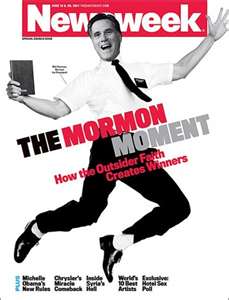
Let’s take Romney as another example. He’s a Mormon. My grandparents were Mormons. So were my Mom’s sisters and their children and grandchildren. I’m not a Mormon, but I think Mormons are fine folks. Some people disagree. They think it’s a cult of heretics where everyone has 10 wives. Mormons have been hated. Probably still are in some circles. You can’t say: “Man, I hate Romney because he’s a Mormon.” But you can say: “I hate that Romney. Damn Republican!” Odd, isn’t?

So, you can hate a religion, but you should keep it to yourself.  Same with race.  Politics, though, is different.  Hate all you want and do it in public.  No one cares, except the people who will hate you as a result.

You really can’t hate some things.  Animals, for instance.  I don’t know that I’ve ever met someone who says he hates animals.  Okay, cats are an exception.  People will say they hate cats, but cats are smug, and some hate that in a pet. Otherwise, if you hate animals, you’re going to fit a serial killer profile.  Some people love animals but hate humans.  As a result, animal hate is dangerous territory, indeed.

Here’s a little experiment:

  • Create a group on Facebook called “I Hate the President.”  Make the profile picture the worst thing you can find of the President.  Maybe this one:

  • Then, create a new group called “I Hate Romney.”  Use this ridiculous image:
  • I assure you that some people will like these pages.  In fact, some people will become enthusiastic members of your group with their own outrageous postings.
  • Now, create a page called:  “I Hate Rescue Dogs.”  Not only will no one like it, everyone will hate you.  You’ll probably be subjected to all manner of investigations and be banned from Facebook.  You will be unfriended. Your student loans will be declared in default, your mortgage foreclosed and the IRS will audit you.  Even the ACLU will turn on you by representing the rescue dogs in a class action against you.  The Southern Poverty Law Center will declare you to be a hate group.

The lesson?  Hate people if you want.  Leave the animals alone.

It’s still unacceptable to hate your family. I find this odd since some people’s families are dangerous criminals or worse. Folks will say “Don’t forget to call dad on Fathers Day!” What if your dad is Charles Manson? Or just a total bastard? I know people who hate their families, but they keep it quiet. If you do, you should probably just keep it to yourself.  Think about this:  With all the hateable people in the world, how can some people not hate their families?

I’ve heard it said that hating someone is like drinking poison and waiting for the other person to die. That’s true for me. So, I try not to do it. I’m not always successful. Sometimes, I will hate the entire UK basketball team for a fleeting moment or two.  Then, I love them again.  I think my children hate me on occasion, and it’s tempting to hate them back.  So far, I’ve resisted, but it’s a struggle. I used to be an angry young man, who hated a lot of stuff.  Then, I realized that all that stuff didn’t hate me back–or really even know I existed.  This realization freed me up to spend more time thinking about me.  One good thing about being egocentric is that there isn’t much room in my head for dwelling on others, what with all the things going on with me.

Sadly, there are few things that I’ll confess to hating, and I don’t think those will change:  Jenny from Forest Gump; gum on my shoe; migraines; Winter; poke sallet; toothaches; door to door salespeople; port-a-potties; being hit in the face; Aunt Bee; the two warts on the back of my right hand; Christian Rock music; and people who hate too many things.

So, that’s my screed on hate.  I’ve professed myself an expert. Don’t you hate it when people do that?

©thetrivialtroll.wordpress.com 2012

The Gaiety of Marriage

I’ve been married for 24 years to a woman.  Wow.  Congratulations to me.  It’s pretty surprising to think that someone married me.  More surprising is that I don’t recall anyone asking me about my views of marriage until recently. Oddly, though, it’s never about my marriage or how I could convince someone to marry me or stay married to me for so long.  No, people want to know what I think about gay people marrying.  I’m not gay, so I’m not really an expert on that.  So be it.

Several folks have asked me about my views of gay marriage.  Now, I’m a fairly conservative sort, and I expect that my response is supposed to be some form of outrage.  Instead, I say:  “I don’t care.  People can marry whomever they want.  It doesn’t affect me.”  Then, I’m likely to be lectured on the Bible, societal collapse and sundry other topics of limited interest to me.    The gist of the response is “HOW CAN YOU SAY THAT??”

Here’s how:  It’s not that big a deal to me personally, but it is to the folks who would like their relationships legally recognized.  When I say I’ve been married 24 years, no one really cares all that much.  Oh, they’ll congratulate me and say “that’s great” or some other lukewarm response.  But, the truth is it’s really only important to me–and my wife (I hope).

If your hands are now poised over the keyboard to explain the Bible to me, stop.  I’ve read the Bible, and I know that it doesn’t speak highly of homosexual relationships.  Speaks poorly of tattoos, too.  And women.  It also says that I should stone my kids to death if they are disrespectful.  Maybe I’ll do that one day.  In the meantime, I’m not one who thinks we should build our laws around the Bible.  Just like the more radical Muslim countries adopt Sharia law, some would have us do the same.  Not me.  By the way, traditional Islam condemns homosexuality, too, so there may be some common ground there with our Muslim brothers.

If you want to belong to a church that won’t ordain a gay marriage, go ahead.  Again, I don’t care.  That’s your business. Now, if YOU are gay and want to get married in a church, I’d suggest changing churches, but again that’s not my business.  Just don’t expect an entire denomination to change its ways to suit you.

That’s church, not the government.  Those are two separate entities, as they are constitutionally required to be.  Our government, which is supposed to provide equal protection under the law, isn’t a church.  The government can–and should in some instances–recognize rights where a church may not.   Some churches don’t approve of dancing.  Yes, that’s right–dancing.  That doesn’t mean we outlaw dancing.  Same goes for drinking and gambling.  Serious vices when taken to extremes, to be sure, but down right Hell fire sinful even in moderation to some folks.  Hey, don’t do it if it’s sinful to you.  If you think a man marrying a man is sinful, then don’t marry a man, unless of course you’re a woman.

What about the collapse of society?  Here’s a secret I’ll share with you:  There have always been homosexuals.  Always.  Society has not yet been crushed under the weight of this fact.  I grew up in just about as conservative an area as one could.  We had gay people.  We knew who they were.  Some were prominent people in our county.  It didn’t seem to affect anyone.

What about destroying marriage and the family?  PUH-LEASE!  I know a guy who’s been married three times who told me that gay marriage would destroy marriage.  Maybe a dude married and divorced that many times is destroying it.  He sure helped destroy three marriages.  I’m not sure how this is supposed to happen.  Will hoards of gay couples come to our house and convince us that we shouldn’t be married?  In my case, I figure if two DUDES can be married surely my beautiful wife and I can handle it.  Maybe we’re supposed to be tempted to marry someone of the same sex if it’s legal.  I pretty comfortable that I won’t do that.

But, what of the Gay Agenda, you say?  I used to know a guy who often spoke of the Gay Agenda.  He never really explained it to me, but from what I could gather it was some type of conspiracy to turn us all gay.  I think I can resist, especially since I’ve known a lot of gay people who people tried to make straight.  That didn’t work either.  Plus, I’ve always been attracted to women.  That’s not because someone made a persuasive argument to me about it or because I weighed the pros and cons of it.  It’s just kinda the way it is.

There are some things the law will allow that churches frown upon and vice versa.  In some states, you can marry your first cousin.  Some churches allow polygamy.    (Polygamy, of course, is a sign of madness since it’s always the men taking more than one wife, but that’s for another post).

One thing that seems to be lost on everyone is that just because the President or Vice-President or former Vice-President say they think gay marriage is okay doesn’t make it legal.  As matters now stand, each state can make its own laws and many have banned it.  Perhaps they’ll ban divorce one day, too.  Some churches do.

If you are genuinely tormented by the prospect of gay people marrying each other, relax. It’s likely that half of them will get divorced if they’re anything like their hetero counterparts.  Hell, they may be no better at it than we are.  If you really don’t like gay folks, think about this:  Half of them will end up divorced, fighting in court over alimony and child support.  That’ll teach them.

I’m not suggesting that you turn gay or that you attend a gay wedding.  I’m not even suggesting that you like gay people. Personally, the vast majority of crap I’ve taken in my life has been from straight people.  Gay people can’t be any worse.  The gay people I know are like the rest of us.  Some are alright.  Some aren’t.

We’re Americans.  We’re free to disapprove of everyone.  You’re entitled to think what you think and believe what you believe.  Just think about giving everyone else a break.

©thetrivialtroll.wordpress.com 2012

To All The Dead and Dying

Those are people who died…died.  They were all my friends, and they died.

People Who Died, The Jim Carroll Band

This is about death.  Not mine, of course, since I’m not dead or in imminent danger of dying (as far as I know).  At this point, you probably have stopped reading.  Who wants to read about something so depressing?  A lot of people, really, because we all think about it, we deal with it and–eventually–experience it.

Why I am thinking about it?  Not sure.  An uncle of mine recently died, and it got  me thinking about it.  He died in May, which is also the month that both my parents died.  That’s apropos of nothing, other than it happened.  My middle son was also born in May.  A bunch of other people were, too.

Could be because I’m an American, and Americans love death. Okay, that may be an overstatement. I don’t suppose we LOVE it. But it damn sure amuses us. Kurt Vonnegut observed that if you die on TV, “you will not have died in vain. You will have entertained us.”

We like death in our movies and video games.  Why do you think there’s a Saw V, for God’s sake? We have the death penalty, which seems to otherwise be the exclusive province of countries we consider evil.  Speaking of which, we aren’t even averse to war anymore. We want peace and will turn the planet into a graveyard to achieve it.

Some death is noble. Some not. Die in a war, and every future generation of your family will know your name. Get stabbed by a hooker, and you’ll be pruned right out of the family tree. I had an ancestor die of “swollen testicles.” That’s not a disease, but syphilis is.  Don’t know his name, but I know uncle Ollie died on the USS Houston.

We’re also the World’s leader in producing serial killers. We don’t get enough death through disease, war, executions and accidents. We kill for sport, too. No wonder I think about death.

Once you reach a certain age, you’ve seen a lot of people die–grandparents, parents, siblings, friends, aunts, uncles, co-workers–you name it.  In my life, I’ve lost both parents, a brother, two aunts, five uncles and a close friend.  That doesn’t even include distant relatives, co-workers and acquaintances.  You live long enough, and you’ll get your fair share of it, too.  Don’t live long enough, and you’ll just be dead.

Even if you haven’t personally experienced it, you can live–or die–vicariously by picking up the newspaper or surfing the internet.  Death is a common topic.  We run obituaries, some brief and to the point.  “Joe Smith died yesterday.  His funeral is today.”  Some are long tributes to the deceased, documenting their every accomplishment, great or small.  We have an unquenchable thirst for news of murders and accidents, the more hideous the better.  Death is everywhere, I suppose.

I think I’ve learned a few things about death, although what I’ve learned may apply only to me.  Indulge me.

Death may the greatest of all human blessings

–Socrates

I don’t know much about Socrates, other than he was supposed to be smart.  I went to law school where they use the “Socratic Method” of teaching.  So, I can also assume that he was a bit of a pain in the ass.  I hope he had better material than this quote to comfort the grieving.

Most people will say that they don’t know what to say to a grieving person.  Welcome to the club, friends.  Almost NO ONE knows what to say.  If you’ve ever lost a loved one, you know this, because folks have said these things to you.  Here are some things which don’t help.

“I know how you feel”:  No, you don’t.  You don’t know how I feel about anything, really.  So, how could you know how I feel about this?  If you knew how I felt, you wouldn’t have said that.

“He’s gone to a better place.”:  Really?  Exactly how do you know?  I wasn’t even thinking about THAT.  If you’ve been dead, I’ll listen.  I mean REALLY dead, not just flat-lined for a couple of minutes.  Dead, as in taken to the funeral home, embalmed and buried dead.  If you’ve done that, you might have some helpful insight.  Otherwise, no one knows where anyone goes when they die.  Plus, even if you THINK you know, maybe my relatives all go straight to Hell.  Let’s just not talk about it.

“Life is for the living“:  My dad used to say this a lot.  Honestly, I don’t know what it means.  Of course, life is for the living.  Dead people don’t do a whole helluva a lot, being dead and all.  I think it’s supposed to mean, “Okay.  Show’s over.  Move on.”  Not helpful.

“Death is just part of life.”  This and other philosophical meanderings about the bigger picture mean nothing.  Yes, I agree.  It’s part of life.  The part that sucks.  Thank you.

“You’ll always have your memories”:  I had those before he/she died.  It’s not like I just got them.  I’m not grieving because I can’t remember things.  That would be a completely different problem.  In fact, if I DIDN’T have those memories, this wouldn’t be so tough.

So, what should you say?  “I’m sorry” is good.  Simple, to the point.  No way to be offended by that one.  “What can I do?”  That’s sort of useless, since you can’t do anything, but it’s a nice thing to say.  Honestly, there’s not much more to say.  And it’s better than saying nothing.

I wanted to tear my teeth out.  I didn’t know what I wanted to do.

–Colonel Kurtz, Apocalypse Now

I can’t talk about death without talking about grief.  Real grief drains your soul.  It takes your life and flattens it.  Nothing looks or sounds right.  Food doesn’t taste good.  Time warps and you lose track of hours, even days.  It’s different for everyone.

Most people know about the Kubler-Ross seven stages of dying:  Denial, anger, bargaining, depression and acceptance. These were observed in dying patients and have subject to debate over the years.  Some extrapolate these stages to the grieving process.  I’m not one of those people.

I suppose people can go through some or all of those stages, but some people are more resilient than others.  Myself, numbness has been an immediate reaction followed by sadness.  I agree with C.S. Lewis who observed that grief was much like fear.  I want to run from it, but there’s really nowhere to run because it hangs with me.

I don’t know that I have become depressed over grief, as much as I’ve dealt with a heavy sadness.  It’s like wearing clothes that are just too heavy.  It wears me out by the end of the day.

I can say that I’ve been angry more than once over death.  A close friend died in the prime of her life, suddenly and without warning.  This seemed unfair–and it still does.  I raged against it, but it didn’t change.   I guess I’ve come to believe that death is actually very fair.  It comes for all of us.

Eventually, though, I do agree that acceptance settles down on me.  I’ve grieved both poorly and well.  I’ve held on far too long to some of it.  Thankfully, it loosens its grip over time.

That’s about me.  What about you?  I don’t know how to tell people to grieve.  If you’re upset and crying and raging, that’s okay by me.  Hell, you’re supposed to be upset.  That’s what we do.  Be upset about it.

What I don’t have is any good advice for how YOU should grieve.  It’s tough, and it’s miserable.  Some folks benefit from counseling.  Others just tough it out.  Some never get past it, and that’s the worst.

You should always go to other people’s funerals.  Otherwise, they won’t come to yours.

Yogi Berra

We have to talk about funerals, those odd ceremonies where we give our loved ones a send off (although they’re really already gone, of course).  I’ve been to a lot of funerals.  Some have been quite good.  Others have been lacking or had downright odd happenings:

  • A lady who was one of the finest people I’ve known had the strangest funeral. After the obligatory bible readings and songs, it morphed into Open Mic Night.  Anyone who wanted to say something could take the stage.  One guy–possibly under the influence of hallucinogens–said death was like walking through a “water wall just like in the movies.”  What movies had he been watching?  One man was so overcome by emotion that most of his comments were confined to odd barking noises as he choked back tears. One eulogized by telling HIS life story.  Others just babbled.  Three hours later, it was over.  As one person said:  “When I die, I hope people have good things like that to say about me and that they keep it to themselves.”
  • I had a friend in high school who died in a car wreck.  His funeral was at a Pentecostal or Holiness Church (one of those fiery denominations).  The preacher observed:  “Every Sunday we heard the putt-putt-putt of his car’s engine as he pulled into our parking lot…THE SAME CAR THAT TOOK HIM TO HIS DEATH!!!!”  There was much weeping and wailing after that zinger.
  • Saw a man come out of the closet during a eulogy.  There’s really not much more to say about that, other than that it was peculiar timing.

By the same token, I’ve been to some excellent funerals, ones where you leave feeling better about the situation:

  • Once, I attended a memorial service for a baby.  It was like taking a beating to show up.  Beyond sad.  The minister, however, was outstanding.  The gist of his sermon was:  “We don’t know why this happened.  I don’t have an explanation.  It really is bad, but we will all go on.”  That may not sound very inspiring, but it was much better than a bunch of meaningless platitudes.  It was honest and all that could be said.
  • A few years ago, a friend’s mother died.  She was in her 90’s, and her death was no shock to anyone.  Her minister simply told stories about her.  Although I never met her, I came away feeling like I knew her.  Folks laughed at the stories, and everyone seemed to be uplifted by it.
  • Another friend’s mother died, and my friend was given the tough task of her eulogy.  He hit it out of the park.  It wasn’t maudlin or sad.  He just told what his mother was like and what she meant to him.  Good stuff.
  • My dad was a retired Air Force officer and had a military funeral.  A bagpipe played Amazing Grace and a bugler played Taps at the end.  Just as the bugler finished the last note, jets screamed by overhead.  He had an honor guard from Wright Patterson Air Force Base.  I still get chills thinking about it.  He would have loved it!

What have I learned from this?  First, a funeral should be respectful but short.  Second, it’s okay if it’s not a sentimental tear-jerker.  Third, simple is good.  A prayer, a song or two, a nice eulogy.  Thank you and drive safely.

What might wonder about MY funeral (or even look forward to it).  I don’t care.  I’ll be dead.  Whatever comforts those left behind is fine with me.  Now, I’d like to be cremated if for no other reason that to prevent people from gawking at my body.  “Oh, he looks so good.”  That should always be qualified by “…considering that he’s dead.”  If I am buried, I don’t care if my casket has an extra firm mattress or silk lining.  Remember–dead men don’t care.  Burn me.  Put me in an urn or scatter my ashes somewhere.  Actually, they’ll be someone’s else’s ashes at that point.  They can do whatever they want with them.

Please don’t bury me down in that cold, cold ground.

Please Don’t Bury Me, John Prine

Speaking of funerals, I love cemeteries.  I’m not sure why, but they fascinate me.  Ornate monuments built-in memory of the dead.  My own parents have a fabulous black marker.  So does my brother.  There are religious markers, plain ones, domes, obelisks, tiny stones, benches, huge vases, above ground tombs–you name it.  This doesn’t even include niches, columbaria, scattering gardens and mausoleums.

We visit them.  We talk to the dead people.  We bring them flowers.   Hell, we’re nicer to them dead than we were when they were alive!  Why?  Again, I have no answers.  Personally, I don’t get a connection to my dead loved ones at the cemetery.  I always think it’s just weird to see my parents’ and brother’s names on tombstones.  Other people get a lot out of it, though.  That’s fine with me.

One reason I don’t want to be planted that way is that I don’t want anyone thinking they’re obligated to “visit” me.  My parents are buried three hours from my home.  Honestly, I don’t go visit their graves.  Oh, if I’m in the area, I check on their graves, mostly to be sure no one has kicked over their headstone.  (I was assured that it is sufficiently anchored to prevent any such vandalism).

Well, again I’ve babbled on about a topic on which I have no expertise.  If you take this as advice, be warned:  It could be very harmful.  Of course, as you’ve often heard, we’re all dying.  Maybe so, but as Josey Wales (he killed a LOT of people) said:  “Dying ain’t much of a living, boy.”

©thetrivialtroll.wordpress.com 2012

Losing My Religion–Sort Of

Your author during a fleeting phase of religious fervor.

“That’s me in the corner.  That’s me in the spotlight, losing my religion.”                                                      

Losing My Religion, REM

I always liked that song, mainly because of its odd lyrics.  Plus, you can make up almost anything to go with it.  That’s me in the kitchen… That’s me in the bathtub… Anyway, I like it, but it has nothing to do with this post.

My seminal blog post on Radio Preachers, plus several recent events, got me thinking about my religion or-more accurately-lack thereof.  What I call religion is the basis of one’s particular faith:  Christianity, Buddhism, Islam, Judaism, etc.  Each of these has its own subsets.  Christianity alone gives us Catholicism, Episcopalians, Baptists, Lutherans, Methodists, Mormons, Pentecostals, and many, many others.  There are Calvinists and Arminians. Snake-handlers and faith-healers.  Evangelicals.  The Dutch Calvinists actually reformed their church, although I’m not sure what was wrong with it to start with.  Islam and Judaism, too, give us many different versions.  As with politics, I am sometimes asked:  “What are you?”  Hmmm.

I consider myself Christian.  Pretty weak response, huh?  What if someone asks me if I’m married, and I respond:  “I consider myself married.”  The listener will think:  “Is he married?”  “Is he gay?”  “Is he widowed?”  “Why does he just ‘consider’ himself married?”  It doesn’t sound like I’m very committed, does it?  I’m not, and that’s the problem, if there is one.  Of course, I’m talking about the religion thing, not marriage.  I AM married.  Let’s make that clear.

The 20th Century was the Golden Era of Christian Apologists.  Now, don’t get your back up.  No one was apologizing for being a Christian.  Rather, there was a great deal of writing in defense of Christianity.  C.S. Lewis, known to many for The Chronicles of Narnia, was the heavy hitter of the apologists.  His book Mere Christianity is the best book I’ve ever read on religion and Christianity, in particular.  It’s better than the Bible as far as explaining it.  Okay, all my devoutly Christian friends, I’m sure that raised your hackles.  If you don’t know what hackles are, trust me–yours are raised.  Settle down.  Lewis wrote of the Christian Trilemma, which was a kind of framework which apologists used for a lot of their writing.  It goes like this:

The two other Abrahamic religions, Islam (Lewis called it “Mohammedism”) and Judaism, recognize Jesus only as teacher, all round good guy and prophet.  This can’t be, and here’s why:

  1. If he is what he says he is, he’s the son of the living God and the Messiah. Strong stuff.
  2. If he isn’t what he says he is–but thinks he is–he’s insane.  Thus, all his teachings and prophecy are questionable, at best.
  3. If he isn’t what he says he is–and knows he isn’t–he’s a liar and con man. Why believe anything he says?

I never could buy into options 2 and 3.  So, I stuck with No. 1.  Not very inspiring, huh?  I’ll be the first to admit that I over-think these things.  Thinking too much is the mortal enemy of faith.

This post is only about Christianity, because that’s the only religion I’ve ever had the least bit of interest in.  I tried my hand at church.  Really, I did.  I wasn’t “raised” in church, as some like to say.  We went to Sunday School periodically.  That’s about it.  As an adult, I gave it good shot and attended church fairly regularly for a while.  I even got baptized.  Then, just about at the point of really getting into it, I lost interest.  Strange?  You bet.  Nevertheless, I’ve held on to some of it and discarded the rest.

I don’t know why I’m writing this post.  Maybe to get it off my chest.  Many are likely to be offended, but that doesn’t bother me.  It would, however, be a mistake to believe that I want you to believe my view of things.  I don’t.  If I’m the only one, that’s cool.  Wouldn’t be the only time I was right and the rest of you were wrong.

I learned to read some. I read the Bible quite a bit. I can’t understand all of it, but I reckon I understand a good deal of it.                                                                                                                                                                       

–Karl Childers, Sling Blade

I’ve drawn a lot of wisdom from Karl.  Plus, he’s fun to imitate.  His view of the Bible sums up my take on it.  Surprisingly, I’ve read the Bible cover to cover.  I’ve studied it.  I’ve read books about it. I understand a lot of it, but it still puzzles me.  The Old Testament God was a vengeful force.  He didn’t hesitate to engage in smiting and punishment.  The Old Testament itself is a violent, sexually-charged series of books which touch on almost every vile subject imaginable.  Genocide, slavery, child abuse, rape and murder are all frequent topics.  Bad stuff.

Marcion of Sinope was a bishop of the early Christian Church.  So horrified was he by the Old Testament that he repudiated that God as being anti-Christian.  For this, he was excommunicated.  Oh well.

I identify with Marcion.  He lived in the 1st Century.  There were probably people who knew a lot of about Jesus the man still around.  I also can’t reconcile the New Testament God with the vengeful, smiting God of the Old Testament.  Old Testament God raged until he went silent and left the raging to his prophets.

The Old Testament urges us to kill our children if they are disrespectful, yet it is surprisingly tolerant of slavery.  Killings, beatings and all manner of debauchery were the order of the day.  No one wonder God goes silent toward the end of the Old Testament.  He’s worn out.

We want to believe in the vengeful God when we want vengeance, the kind God when we want forgiveness.  No one wants to do all the burnt offering stuff in the Old Testament, but a lot of folks like the eye-for-an-eye.  Me?  I read the Old Testament for the entertainment value and the New Testament for the Christianity.

Pray to God, but row away from the rocks. 

–Hunter Thompson

That pretty much sums up my prayer life.  Of course, since Hunter Thompson shot himself, maybe I should find a more centered theologian.  Prayer is the one topic where I have heard the most divergent views, even from those I consider devoutly Christian.

I pray.  I do.  Sometimes I’m not sure why or what I’m praying to, but I do it anyway.  I’m not supposed to say that, of course, but it’s the truth.  Why do I do it?  Because, for me, it works.  Now, I’ll admit that I don’t have the ability to call down God to take care of all my woes.  For example, if I’m really behind at work, I can’t ball up in the floor and have God show up and take care of everything.  I have to row away from the rocks.  I also can’t call in God to heal all my relatives and keep them alive forever.  Wish I could.

People tell me that you can pray for money and get it.  You can pray to be healed from otherwise incurable diseases and be cured.  You can pray to protect people, and they’ll be protected.  You can pray to elect someone to political office, and they’ll be elected.  The list is endless.  You can pray these things for yourself or others.  Check out Facebook, there are calls for prayer all the time.  If you’ve had these experiences, I’m happy for you. I won’t argue with you about it.

I’ve made people very angry talking about prayer when I tell them that I  never have change in circumstances.  I can pray until my knees are bloody for God to protect our troops overseas.  Someone of them will die anyway.  Many others will be maimed for life. In the past, I prayed for people’s health and then watched them die.  Well-meaning folks say that it just wasn’t God’s will.  Hard to argue with that.  But, if not God’s will, praying for it to happen won’t do any good, will it? Likewise, if it is God’s will, does he only respond if I ask him or 10 people ask?  That’s all too complicated for me.

What I get is a change in ME.  I come to accept things the way they are and try to do the right thing in all circumstances.  I’ve had folks on the other end of the spectrum tell me that’s just a placebo effect.  Maybe so, but I like it.  In my world (where I alone dwell), being able to call down God to fix all my problems would really make me God.  That would certainly be a dangerous situation for the rest of mankind.

I’ve had many folks bristle at my description of prayer.  They tell me that God healed them and their families.  He saved them from dire circumstances.  That all may be true, but it is not my experience.   Plus, I’m a cynic.  I once saw an interview with Oral Roberts’s brother.  He said something very simple and without any apparent malice toward Oral.  He wondered why, if Oral had the power that he claims, Oral didn’t spend all his days in children’s hospitals.  (Note–please resist the urge to browbeat me over this.  It’s a valid point).  Indeed, why wouldn’t he?

Jesus gave an example of how to pray, the Lord’s Prayer.  It’s pretty simple, basic stuff.  He doesn’t ask for money or health or boundless good luck.  Basically, he says your will be done, give us our basic necessities and forgive us to the extent we forgive others.  The End.

Hey, Mama! Look at me!  I’m on my way to the promised land.  I’m on the highway to Hell…”       

–Highway to Hell, AC/DC

I’m a Hell agnostic.  I just don’t get it.  A loving God sends his son to die for mankind and then tortures a good number of them eternally.  I know, I know.  It’s not God punishing them but Satan.  I get that part.  Still seems pretty harsh.

Jesus didn’t dwell on Hell like a lot of his followers do.  If I had been Him–and I’m not as far you know–I would have added this to the Sermon on the Mount:  “Now, pay attention:  If you don’t follow me and believe in me, you’re going straight to Hell when you die.  Burning, weeping, wailing, gnashing of teeth–the whole shooting match.  It’s going to be awful.  Trust me on this.  If for no other reason than to avoid this, you should pay close attention to what I said today.  Thanks!”  That would sure have cleared up a bunch of stuff.

Make no mistake about one thing:  When people ask you if you’re “saved” (they ask that a lot in Kentucky, by the way), they mean saved from Hell.  My typical response is “I’m pretty comfortable with my status.”  A piece of advice:   Don’t borrow that.  It never works.  It just leads to more questions and the inescapable conclusion that the yawning mouth of Hell awaits.

Carlton Pearson is an interesting fellow.  He’s a minister, but I guess he calls himself a bishop of something.  He’s a former protegé of Oral Roberts.  He doesn’t believe in Hell.  It’s that simple.  I’m not sure I agree with all he says, of course, since I don’t agree with almost anyone on any subject, but it’s a fascinating ministry.  As you might expect, he’s also considered a heretic in some circles, which likely condemns him to the Hell in which he does not believe.  He operates from a simple premise:  No one really knows what happens when you die.  Wow.  That’s some strong stuff for a preacher to say, but I agree.  I don’t know, and I don’t think anyone else does, either. Now, some folks have great faith in Heaven and the same faith in Hell.  I don’t have faith in Hell.

Here’s where I lose faith in Hell.  I’ve known lots of good, fine people–some in my own family–who either weren’t Christians or were Christians in the loosest sense of the word.  I just don’t see these otherwise fine folks burning for all eternity in misery.  Ghandi?  Hell.  The Dalai Lama?  Hell.  Thomas Jefferson?  Hell.  All the people who never heard of Christianity?  Hell.  Hell’s bells, indeed.  God doesn’t drive that hard a bargain.

Now, there seems to be a consensus (with the likely exception of the Westboro Baptist Church) that small children don’t take the rocket sled to Hell, but I’m not sure why.  Probably because it just wouldn’t be decent.  A Hell crammed full of kids just seems mean.  No kids allowed.

To believe in God is impossible.  To not believe in Him is absurd.

–Voltaire

By now, you’re probably saying:  This guy is some kind of atheist.  Sorry to disappoint, but no, I’m not.  There isn’t “some kind” of atheist.  Atheism is an all or nothing game.  You believe in nothing.  In my youth, I pondered whether I was an atheist at one point, until I realized that atheism requires the utmost, unshakable faith–absolute certitude.  I can never get there.  Christianity–and religion in general–has a lot more wiggle room.  A mustard seed of faith, as Jesus noted, is all one needs.  That won’t cut it with atheism.  You can’t say:  “Hey, I’m willing to believe that there is no God.  Tell me more!” Atheists don’t allow doubt.

I’m told that the Earth was formed like 60 bazillion years ago by a big explosion out of nothingness and that life started and evolved over billions of years.  I can’t really argue with that, because I just don’t know.  I guess I believe that, but it takes a big leap of faith to do so.  For my mind, it’s no easier to believe that than it is to believe in God.

If you ARE an atheist, I don’t care.  It doesn’t offend me, and I’m not going to try to make you believe what I do.  Like Thomas Jefferson said, it doesn’t harm me if you believe in 20 gods or none.  Carry on.
A church is a place in which gentlemen who have never been to heaven brag about it to persons who will never get there

–H.L. Mencken

I’m a back slider, as the Baptists say.  I don’t like going to church.  That’s not a good thing, I don’t suppose.  Just a fact.  I’m not sure why.  I think it’s just boring to me.  Again, I’m not all swelled up with pride over that, either.  I’d like to have the enthusiasm for it that I see in some people.

I don’t care if people at church are hypocrites.  Isn’t the church where they SHOULD be? Seems to me that we should want all the worst sinners to show up every time the doors are open.  It’s probably where I need to be, too.  I’d like to get into it, but it never took. I didn’t lose my religion as much as I just had a tenuous grasp on it.  I’m lucky to have held on to any of it.

Could be that when we die, we meet God.  We might look around and see Jews, Muslims, Hindus, Buddhists and Christians of all stripes–everyone.  I would say:  “Uh, God, what’s the deal? How’d they get in?”  I imagine God saying:  “Look, since the Tower of Babel, I gave up on you people being able to do much together.  I knew if I gave you only one way to get here, you’d screw it up.  So, I gave you some alternatives.”  But, I’d have to ask:  “Ok, but what about the ones who, you know, didn’t believe anything?”  God would say:  “Oh, them?  They went straight to Hell, of course.  You all weren’t wrong about EVERYTHING!”

©thetrivialtroll.wordpress.com 2012