Soccer Punch

Typical soccer fans cheering on their teams

I’ve been watching some soccer lately.  I do that on occasion, like when I’m at the gym and flipping around the channels while I’m on the Stair Master.  I like sports.  Soccer is a sport.  I’m told it’s the most popular sport in the world, and that appears to be true.  Fans paint their faces and act nutty.  Sometimes, they kill each other.  Sometimes, they even kill the players.  The word “hooligan” is used almost exclusively for soccer fans these days.  I like that word, so I should like soccer, I guess.  But, I don’t.

Hooligans have their own version of The Wave.


I know it’s fashionable for Americans to say they hate soccer.  I don’t hate it.  I just don’t get it.  If I had grown up playing it, that would be different.  Where I was raised, we would have been more likely to play that Afghan goat carcass polo game than soccer.  I also know why kids like it (soccer, not that goat game).  It’s a bunch of running around and kicking things.  I would have liked doing that.

Heated buzkashi match, where the object of the game is to hurl a headless goat carcass across the goal line. How has this never caught on in Harlan County?

I also don’t dislike the foreign-ness of it.  I’d watch a buzkashi match.  In the early days of ESPN, it didn’t show any real sports, just stuff like snooker and badminton.  It did, however, have what was probably the exclusively North American right to Australian Rules Football.  I used to watch that and enjoy it.   It’s a hybrid of soccer, American football, rugby and a bar fight.  I came to believe that “Australian Rules” means no rules at all.  But, it’s not soccer–not even close.

If you’re anything like me–and you probably aren’t–you don’t much about soccer.  Watch a little, and you’ll pick up the basics.  Here are a few things I know about soccer:

  • I’ve tried to learn the rules, such as they are.  You can’t use your hands–that’s pretty clear.  Your head is okay.  We don’t like people using their heads to strike things in American sports, but it’s okay in soccer.  I guess the ball isn’t very hard.  Americans prefer sports where the things hit your head–football, boxing, MMA and baseball to name just a few.
  • Matches (not “games”) are divided into halves, each roughly 4 hours long or so it seems.  The clock never stops.  Some games are called “friendlies.”  Those don’t count.  A friendly is like an exhibition game, I guess.
  • You don’t play on a “team.”  You’re on a “side.”
  • They have offsides, which I don’t understand at all.  It happens sometimes, but I never see it coming.  Often, I think I see it, but I’m wrong. When it happens, a guy holds up a flag like at a NASCAR race.
  • Soccer is played on a field, except it’s called a “pitch.”  Why?  I don’t know.  It’s a big field.  BIG.  On TV, it looks about 500 yards long.  I’m sure it’s not, but that’s how it looks.  The players look like ants.  Maybe the pitch isn’t that big, but the players are tiny.  It’s hard to tell.
  • I think there are eleven players on each side.  Sometimes, it looks like there are 200 players on the pitch.  Other times, I think there are only about 5.  I’m sure it’s an optical illusion caused by television.  I’m not sure what their positions are, except the goalkeeper. I also don’t know what they are supposed to be doing, other than kicking the ball around.  Obviously, I know that they want to kick it into the goal, but most of the action takes place far away from the goal.
  • They have referees, but I don’t know what they do.  If you do something wrong, they whip out a Yellow Card, which is kind of silly, but no more silly than throwing a yellow flag, I guess.  A Yellow Card means you’re in trouble.  They call it “misconduct,” a polite way of saying you play like a complete bastard.  You’ve might tripped someone or spit on them or even killed them (not out of the question in soccer).  Something bad happened, for sure.  A Red Card is BIG trouble.  I think it means you’re ejected.  Maybe they throw you to the hooligans.

I’m not up on all the rules, but this appears to be a misconduct.

  • There aren’t a lot of goals made. Most Americans complain about the lack of scoring in soccer.  That doesn’t really bother me.  Let’s face it, in football (by the way, I KNOW that every other country calls soccer “football” or even “futbol.”  I don’t care.), there aren’t that many scores, either.  It’s just that, as Americans, we were clever enough to count each score 3 or 6 points to make it seem more action-packed.  My problem is that I never know when they are close to scoring.  Fans will be cheering wildly and I’ll think there is no chance of anything happening.  Maybe they’re cheering about something other than scoring.  Possibly, there’s been a fire set in the stands.
  • I think they run plays in soccer, but they might not.  Occasionally, it seems that the players are working in some type of coordinated effort to get the ball past midfield.  Near the goal, it’s bedlam.   Eventually, someone will actually kick the ball toward the goal, but it’s rarely successful.
  • I’m never quite sure if I’m seeing good plays or not.  Someone will post on Twitter something like:  Egbert cocked up the play with that flick header. Barmpot!#DIEMANU.  I will have been watching the same match but see none of that.
  • The exception to the paucity of scoring is the penalty kick.  A player gets to kick the ball at the goal with the goal keeper standing there trying to block it.  I don’t know when or why they get these kicks, but it has something to do with the Yellow Card business.
  • Like a lot of European-ish sports, gentlemanly play and sportsmanship ought to be important.  Then again, maybe they aren’t.  Soccer hooligans certainly don’t follow any such rules what will all the burning and killing that accompanies many matches.  No insult is too politically incorrect nor is violence necessarily frowned upon.

Poor Jimmy Hill. Not only is he openly hated by this child, but he’s also apparently a “poof.”

  • Soccer broadcasters are good.  They are very into it.  ESPN has a guy who sounds the Lucky Charms leprechaun.  He’s entertaining.

Soccer uses a ball and keeps score.  That makes it a sport by my definition.  The players are certainly athletic, running madly about the pitch.  The games are competitive, and the fans are insane.  It has all the elements of something I’d like, but I just can’t get there.  I’ve thought about it, and I have a few ideas about spicing it up.

What could soccer do to hold my interest?  Here are a few of my thoughts:

  • Let them use their hands.  Hell, let them throw the ball to each other but not backwards, only down field.
  • Put in some real defense.  If a player has the ball, let the defender knock him down.
  • Let them pick up the ball and run with it.  With that many players on the field, it’s going to be tough to get very far anyway.
  • Make the goal bigger.  I mean REALLY bigger, like the entire width of the field.  Oh, and get rid of the goal keeper.
  • Instead of just running around willy-nilly, give each team 3 or 4 shots at moving the ball toward the goal.  Let’s say that you can keep the ball if you can move it 30 or so feet.  If you can’t score, you can just give the ball to the other team.
  • Instead of the odd random markings on the pitch, maybe you could mark it off in a grid to keep track of team’s progress.
  • Limit the kicking of the ball.  Honestly,  99% of it doesn’t accomplishment much anyway.  Maybe you can keep the old goal to kick the ball into, but make it count less than running the ball across the goal line.
  • Rethink the ball itself.  Instead of round, it could be kind of oblong.  That would discourage all the kicking and make carrying it easier.
  • You might want to change the uniforms to provide a little more protection.  Instead of shorts, I’m thinking odd, tight knee pants with padding in them.  Maybe a helmet of some kind, too. If you really want to rev it up, let the players put padding on their shoulders to wallop the hell out of their opponents.

With these few little tweaks, I think I’d watch.  They could put games on TV on the weekends–Sunday would be good.  Monday night, too.  I think it would work.

If you’re a soccer lover, you’ve read this and are poised to rebuke me with the beauty of the game.  Don’t bother.  This lad sums up your views perfectly:

Enthusiastic young soccer fan expressing his displeasure at this post.

©thetrivialtroll.wordpress.com 2012
Confessions of a Baseball Dad

I loved baseball as a kid. Loved it. Loved watching it, listening to it on the radio, playing it, reading about it. Before there were girls, there was baseball.  After girls, there was still baseball.

I’ve been watching youth baseball since 1998 when my first son started playing t-ball. Two more sons followed. My middle son has continued to high school and Summer travel teams. I don’t know how many games I’ve seen, but it’s somewhere north of 1000. My youngest, 10 years old at this writing, is just getting cranked up in the baseball world.  This year alone–among high school, Little League, all-stars and American Legion–I’ll probably watch over 100 games.

Why do I write this? Because I’ve learned a few things. Some by watching others, some by my own stumbles. I’ve always thought the best way to learn is through the mistakes of others, but life isn’t always that tidy.

I played baseball but not particularly well. I was fast, but that’s about it. I also had a stubborn unwillingness to work hard or take instruction. Couple that with limited natural ability, and athletic success was not within my grasp.  One day I might have kids.  Boys even.  They would play. I did have boys, three of them.

Like a lot of first loves, my baseball love faded over time but never died out. I wanted my boys to play. I wanted them to be good. I wanted them to love it. Baseball rattles, tiny uniforms and little bats were the baby gear I favored.  I wanted my boys to play baseball–and any other sport they wanted to try.  Sports build character.  Teaches life lessons.  I found out that all that is true, but I’m the one who may have learned the most.

Three Teachers

My oldest son didn’t love baseball. He liked it.  When he played t-ball, he figured out that if you threw the ball from the outfield, play would stop. So, he’d picked the ball up and toss it maybe 3 feet. Dead ball! It was one of many early signs that he was smarter than we were.  But, he liked playing and seemed to have fun in his distinctive low-key style.

I knew early on that my oldest son wasn’t going to be a ballplayer forever. Now, I suppose the dramatic story would be that I struggled with this and it tortured me. It didn’t, but he taught me.  He was supposed to love it, because I did.  But, he didn’t.  Now, I don’t think he played in order to please me.  It’s just something he did, like going to school.

He taught me that my kids can find their own way without me mapping out their every step.  He found his interests without much help from me. No, it wasn’t baseball, although he played until he was 15.  I enjoyed it, and I think he did, too.  But the things he loved were different.  He could draw.  He loved to read. He taught himself to play the piano (I certainly was no help with that).  He loves math. Again, I’m pretty useless with that, too.  He taught me what my Dad told me long ago about my kids:  “Find out what they like and learn to like it, too.”

In his last season of baseball, my oldest was used mostly as a pinchrunner.  I didn’t like that one bit.  I suspect he didn’t, either.  He showed up to every practice, every game and rarely complained.  He pinch ran, stole bases and scored runs.  For the first time, I admired one of my children.  He showed up and did his job.

My second–and middle son–was different. He loved baseball. He made me throw him grounders when he was 3 years old until my arm ached. He made up a game called “cool scenes,” which required me to give him increasingly difficult plays to make. He wanted to be catcher–the BEST catcher. So, we worked on it. He put on full catcher’s gear and I would bounce baseballs to him. Oh, yeah, he kept his hands behind his back and stopped them with his body. And he was 6 years old. He became a helluva catcher,  starting as an 8 year old catching 12 year old Little Leaguers. When he was 12, he was a one man wrecking crew.

If throwing baseballs at a six year old sounds extreme, it is. It’s also extreme to tell a 5 year old before his games: “Remember: You’re the best there is. Prove it. Kick their butts!” I did that, too. He ate it up and believed it. He also played like it.  I was from the Marv Marinovich School of Parenting.

With me, there was a problem with this approach.  It’s hard to reign it in. If you do that before the game and after the game, it’s hard not to demand it during the game. That’s problematic. I would yell. I would rage. I would want to strangle coaches, parents and opposing players. In short order, I started to become Monster Dad.

You’ve seen this guy. He yells. He paces. His face is red. He barks instructions or criticism between each pitch. His kid’s success is his success. Failure is an indictment of his parenting and, indeed, worth as human being.

I will say one thing for Monster Dad: This approach can be quite effective. Sadly, it’s downside is the creation of Monster Kid. At least–to some extent–that’s what I got. My son would fume, throw things and curse. Or he would exalt in his accomplishments far beyond their real worth. In other words, he acted just like I did.  Of course, I attributed none of this to me.  It was just his personality.

So, I had this kid who played ball the way I always wanted to. Hit the snot out of the ball; strong arm; fast; played all out. He also preened at home plate after home runs; threw helmets; and punched walls. Hmmm. How do I get him to stop this?  What will people think of me?

Well, in my case, I had to stop my behavior first. And I did. I shut my mouth. I stopped blowing up every good game into the greatest event I ever witnessed. I stopped critiquing his every move.   Turns out that some of it was his personality, but a big part of it was mine.  I had to change before he did.  I’m now the dad you rarely hear at the games and never hear yelling AT his kid.  If he has behavior issues (which is rare now), his coach will handle it on the field.  My job is after the game–in the car or at home.  I’m not perfect, either.  He could tell you that.  I still have my flare ups, too, but all in all I keep my mouth shut.

What have I gotten in return? A kid who matured into a young man. He’s still too demanding of himself but goes about his business on the field. Oh, occasionally, I’ll hear a helmet placed down none-too-gently or hear him muttering expletives on his way back to the dugout. That’s okay. Striking out is not the same as getting a hit.  I’ve matured along with him, and we both enjoy the experience. The only time he’ll ever get criticized by me is if I see behavior that has no place on the field. Then, he’ll hear about it from me, but it will be between us.  He still wants to be the best and works hard to be just that.  He’s more intense than I’ve ever dreamed of being.  I admire that.

My youngest found his own way. He is almost 7 years younger than my middle one. He watched his brothers play. He started swinging anything that looked like a bat from the time he could stand up. Left handed, too. Sweet swinging. He’d throw anything that resembled a ball.

My youngest never met Monster Dad. I just let him play. He’s good, too. Same physical attributes as his brother but little of the attitude. He’s egocentric, but all decent ballplayers are. When he steps on the field, he believes he’s the best player.  He has fun, smiles a lot and rarely hears his Dad’s voice during games.  He has his moments.  We’ve had tears and tantrums, but very rarely.  He plays hard and always has fun.  I admire that, too.

I used to attribute these differences among my kids to their personalities–which are very different, by the way. That was until I took a look at my own actions. Each child reflects–to at least some extent–my attitude toward him. I learned something from each of them. I can’t take credit for their athletic ability, though I’d like to do so. My influence came through how I dealt with each of them.  While I was dealing with them, they were teaching me.

Teaching Moments

I’ve seen towering home runs and lock down pitching. Slick fielding and laser-like throws. I remember my 10 year old coming in to pitch against the best team in his league and striking out the side on 10 pitches.  And an 8 year old catching a cut off in the outfield, spinning and nailing a runner at the plate. There have been many, many others. These are easy.

Now, for the hard parts. Strikeouts, game-killing errors, injuries, pitching meltdowns and countless others. Hey, you gotta be there for those, too.  How about your kid dropping the F Bomb on his way to the dugout? That’s happened.   Ejected from a game?  Been there.  Benched for throwing a fit?  Yep.  We’ve learned to say: “Hey, that sucks, but it’s over. Time to move on.” No one enjoys these moments, but they happen.  Suck it up.

It took me awhile to figure out something and apply it to my kids.  I don’t like being yelled at.  Ever.  For any reason.  If you yell, I don’t listen.  I just want to yell back.  It’s no surprise that my kids are pretty much the same way.  Honestly, aren’t most people?  I see the parents who yell and rage at their kids.  If you do that, take a look at your kid after you do it.  You won’t see a look of affection, I’ll guarantee that.

The highs are never as high as I think they are nor are the lows that bad.  I learned that watching my kids play baseball.  A clutch hit is great, but it doesn’t cure cancer.  A critical error is bad, but we still have everything we had before.  Relax.  Enjoy.  It’s just a game.  So is life.

What Have I Learned?

Left on their own, kids will play ball and have fun. Do you learn anything else? Do sports really build character? Maybe. Oh, there are kids from such bad backgrounds that any type of structure probably helps, but there aren’t a lot of those. The older they get, the more they see that working hard and being good at what you do pay dividends.  There are certainly benefits to that, but the sports world is not the exclusive proving ground for those lessons.

Everything isn’t a matter of life and death.  My kids aren’t the center of the universe.    I go to games to watch my kids.  Other parents show up to watch theirs.  If my kid has a bad game, I’m no better or worse parent than I was when the game started.  Simply put, we’re not all that important. I’ve never seen a really good athlete who wasn’t a bit of a narcissist. Would a star player really be okay with going hitless just because his team won? Nope. It’s just not reality. Youth sports feeds this. People slap your kid on the back and tell him he’s great. You do, too. That’s why some of those bad moments are okay. A little ego deflation never hurts

So, my kids have learned a few things, but the real student has been me.  Most of my life, I have been relentlessly critical of myself.  In my mind, a good day was fluke, and bad day would last forever.  No matter well I did something, it could always have been better.  The world, it seemed to me, was focused on what I was doing.  One slip up, and failure was sure to follow.

Turns out that I was wrong about all that.  If you strikeout, you get to bat again.  If you lose, you can play again.  Preaching to my kids to let things go and play the next game has had a positive impact on me, if not them.  I can’t tell someone something over and over without applying it to myself. Bad days, like bad games, don’t last forever.  There’s a next day, just like there’s a next at bat–even a next pitch.

In my case being a parent has built my character.  Taught me discipline.  Taught me patience, understanding, even empathy.  While I was trying to teach my kids these valuable life lessons, I was the one learning.  They were clean slates.  They didn’t have a lifetime of bad habits and ego-centric behavior to deal with.  I did.

So, here it is–what I’ve learned:

  1. Play to your strengths and don’t let anyone else tell you what those strengths are.
  2. Whatever your role, go hard.
  3. There’s nothing wrong with wanting to be the best if you follow the first two rules.
  4. While you’re following the first three rules, have fun.

If I do these everyday, they’re all good days.  Thanks, boys.  Well, I’m done.  I have to pack for a trip to Georgia–baseball tournament this weekend.

©thetrivialtroll.wordpress.com 2012

My (Big) Blue Heaven

Since the end of our glorious University of Kentucky Basketball season, I’ve been jotting down my thoughts on the year from time to time.  Many of you have reveled in the 2012 NCAA Championship, but may feel slightly unfulfilled.   You’ve asked yourself:  “I know I’m happy, but what does HE think?”  Now, you can know.

  • In the span of one year, Anthony Davis was named a McDonald’s High School All-American; NCAA Freshman of the Year; NCAA Defensive POY; Consensus National POY; SEC POY; First Team NCAA All-American; and Final Four Most Outstanding Player.  In addition, he won an NCAA championship; is the likely 1st pick in the NBA draft; and has a chance to play on the Olympic team.  If this isn’t the best year a college player ever had, it’s got to be close.
  • I can’t overstate how impressed I am with the job John Calipari did this year.  It’s tough enough to meld a team of stars and potential stars into a cohesive unit.  When many of your players are straight from high school, it’s even tougher.
  • The post-championship statewide Trophy Tour was pure genius.  Cal knows his audience.  I also really liked including Joe Hall and Herky Rupp.  Hall has become something of an elder statesman of UK basketball, but Coach Rupp has been largely pushed into the background.  The Rupp family has spent far too much time defending his legacy.  It was a nice move to include Coach Rupp’s son in the celebration.  Well done.
  • Speaking of Davis, his high school team went 6-19 his senior year.  I can only assume his teammates were less than skilled.
  • Michael Kidd-Gilchrist is one of my favorite players ever at UK.  He played hard on both ends of the court with the same demeanor at all times.
  • I’m the worst at evaluating NBA potential.  I’m the guy who thought Rajon Rondo would be out of the league in 3 years and that Ron Mercer would be a perennial all-star.  With that qualification–and as much as I like MKG–I really question his NBA skills.  I just wonder if a player his size without a reliable jumper can be a star.  I know he can play in the league, but will he justify being a top 5 pick?  Probably (see my comment on Rondo above).
  • I have the same questions about Doron Lamb and Marquis Teague but for different reasons.  There are players like them in every major basketball conference.  What sets them apart?  I’m not sure.  I hope they have great success, but I will be surprised.
  • Don’t be surprised if Darius Miller plays in the NBA for a long time.  He has the size and skills to do a lot of things well.
  • Eloy Vargas impresses me.  Like a lot of folks, I had hoped he would be a big contributor on the court, but he wasn’t.  Despite attending three colleges, he got his degree.  Plus, by all accounts (including that of my 10 year old son), he’s a nice young man.  A lot of players would have been frustrated with his situation.  He embraced the experience at UK.   I wish him well and hope he gets a chance to play for pay.
  • There has been all manner of weeping and wailing and gnashing of teeth over the end of the UK-IU series.  Name the most exciting moments from the last 20 UK-IU games.  Ok, Mike Davis’s mental collapse is one.  Watford’s jumper is another, and that just sucked.  For whatever reason, the game wasn’t that important to either UK or IU.  I suspect that it’s because neither school is all that fired up about a tough pre-conference game.  Add to that the obvious close friendship between Cal and Tom Crean.
  • Speaking of schedules, I used to believe that a tough pre-conference schedule was a key to being tournament-ready.  Take a look at other schools’ schedules.  Duke rarely plays a good team on the road.  All its tough games are at home or neutral sites.  The same is true of many top teams.  Teams loading their schedules with killer home and home series are a thing of the past.  Seeding for the tournament is too important to get saddled with 3 or 4 non-conference losses.
  • I suppose it’s a function of age, but the Cats winning the title did not fill me with the unbridled joy of, say, the 1996 title.  I know it had been 14 years between titles, but now 14 years just doesn’t seem that long ago.  Plus, I guess I’ve reached the point where a bunch of children winning a tournament doesn’t REALLY make my life any better.
  • The NBA’s “One and Done” rule is here to stay.  I heard a recent interview with NBA Commissioner David Stern, and he expressed his view that the rule works quite well.  I agree.  It gives the NBA a one year screening tool to weed out those high school players with holes in their games or,  as in Anthony Davis’s case, to discover those who are far better than originally thought.  I don’t see the NBA changing it any time soon.
  • A by-product of the One and Done Rule is that predicting college basketball’s powers year-to-year is now almost impossible.  Right now, most assume that Louisville and Indiana are two favorites to win the title next year.  We’ll see.  Once you mix in all the incoming freshmen, the landscape may change dramatically.
  • People pay too much attention to the RPI during the season.   It’s not a game-to-game measuring stick.  It’s designed to place a value on a team’s entire season.  That’s why looking at your school’s RPI in December is useless.  Now, if your school LOSES to bunch of low RPI teams, you’ll see the difference come seeding time.
  • I guess the big recruiting “get” is Nerlens Noel and his flat top fade.  He seems to be an engaging young man and willing to embrace Big Blue Nation and all its madness.  Here’s hoping that BBN tempers its expectations of him.  He’s not Anthony Davis.  Davis was a once in a generation talent.  Let’s cut this young man some slack and let him develop as a player.
  • I’ve heard a lot of debate about whether Davis and similar short time Cats should have their jerseys retired.    Why not?  If the honor is to recognize great basketball players, it shouldn’t matter if they played one year or four.
  • It doesn’t bother me at all if a student leaves college after a year to play pro basketball.  For most, that is their career goal.  I’ve never known anyone who was harmed by attending college, even for a year or two.  They’re not being exploited.  They are being given a golden opportunity to change their lives and the lives of future generations.  Plus, the education is always available.  Shaquille O’Neal just earned his doctorate.
  • Of course, the downside to winning the championship is that it feeds the beast.  I fear that out-sized expectations have returned.  Remember folks:  Getting to the Final Four is hard.  Winning the tournament is even harder.  Enjoy the ride.
  • It’s hard now to imagine that Billy Gillispie coached at UK, but he did.  He gave me the gift of seeing what it’s like for UK to be irrelevant.
  • I hope our YUM! envy passes soon.  I realize that Louisville plays in a palace now, but I don’t care.  Rupp Arena is the home of the Cats.  Maybe it needs more upgrades and isn’t the prettiest venue, but I like it.  The last thing we need is a white elephant that can’t ever be paid off.
  • Can we stop with the talk that UK spends too much money on sports?  Here’s how it works:  Right or wrong, college sports generate  huge dollars.  The argument seems to be that UK should take all that income and re-direct it to academics.  Now, the football revenue–coming largely from the SEC–could be pilfered for quite a while.  The basketball program would quickly dip into irrelevance without paying coaches top money and spending on top flight facilities.  It doesn’t cost the university a dime.  Get over it.
  • While we’re talking about academics,  I’m certainly no intellectual nor I am an academic snob.  I have two degrees from the University of Kentucky, and I’ve done quite well.  It must not be nearly as awful a university as I hear others complain about.
  • Was the 2012 team the best ever at UK?  I don’t have any idea.  The ’96 team certainly had more depth and experienced talent.  The ’78 team was the only one that I thought would win every game it played.  My Dad would have said the 1948 team.  You can only compare teams and players to the their competition.  In its way, this team was every bit as dominant as UK team I’ve seen.  That’s good enough for me.
  • Calipari is ahead of his colleagues on dealing with modern college basketball.  The top shelf players want to attend college for a year, maybe two.  Cal has created a system to allow them to do that if they have the skills.  Yes, there is a revolving door, but that’s going to be the case with all the top talent.  UK just has more of these players than other schools.  That being the case, the Cats will be a top team more often than not.  I expect this will even out some in the next few years, but for now let’s enjoy the ride.
  • There will be annual speculation about Cal leaving UK.   I think there are a couple of reasons for this.  One, he failed as an NBA coach and the media (especially ESPN) holds to the idea that the NBA is the pinnacle of success.  The other is that UK, despite its success, is just not held in high regard.  There is never speculation about Roy Williams or, rarely, Coach K.  The implication is that a coach would be insane to leave either of those jobs, but equally crazy to stay at UK.  It wouldn’t surprise if Cal did jump back to the NBA at some point, but I don’t see it being the yearly flirtation that it was with Rick Pitino.
  • There’s been uproar over Cal’s views on scheduling.  He’s 102-14 with a title.  I’ll defer to him on that.  Like I said, he’s ahead of the curve.  I’m willing to bet he’s right about this, too.  I’ve heard comments like:  “They can’t expect to keep asking for big money if they don’t deliver a great home schedule.”  Really?  If you have season tickets, turn them in.  I’m pretty sure UK can unload them.
  • The best news since the title has been that a good friend of mine has purchased two seats behind the UK bench.  Sweet.  This fits well with my personal philosophy.

So, there you have it–the random thoughts which bounce around in my head from time to time.  Now, what we will look like next year?

©thetrivialtroll.wordpress.com 2012

Music City Mayhem: One Night In The Box

It was 1999.  These were halcyon days of University of Kentucky football.  We had endured 8 years of the Bill Curry Era which resulted in one non-losing season.  Even that season ended in disappointment with a disheartening Peach Bowl loss to Clemson.  Curry was eventually fired.  In 1997, UK hired an unknown and incredibly ill-prepared coach from a Division III school–Hal Mumme.  Mumme brought one thing to the table: An insanely pass-happy offense.  We loved it. Our Kentucky-bred hero Tim Couch played quarterback and broke every school passing record.  At the end of the 1998 season, we actually went to New Years Day bowl game, losing a close game to Penn State in the Outback Bowl.

The 1999 season was also a success, albeit not quite what we had under Couch.  Dusty Bonner was our quarterback, and UK had another winning season!  For the first time in 15 years, we were going to bowl games in consecutive years.  This time, it was the Homepoint.Com Music City Bowl in Nashville, Tennessee.

At the time, I worked at a law firm which had an office in Nashville.  The Firm secured a luxury suite at Adelphia Stadium for the Music City Bowl.  Normally, I would have been excluded from benefitting from this without a second thought; however, I had stumbled upon some good fortune which made it possible for me to at least request a couple of tickets for the BOX.

Like most large law firms, the Firm embraced a concept known as “origination credit.”  Essentially, this was a system (I use that word loosely) which gave attorneys credit for bringing clients into the Firm.  Once you got origination credit, all the money generated by that client went into a column called “Origination.”  You wanted that column to swell.  If it did, you not only could make more money, but you could also gain access to some of the perks reserved for the Firm’s high rollers.  The Box was definitely one of those perks.

I had (and still have) a very close friend.  I shall call him “Nick” for purposes of this tale.  That is not exactly his real name.  Nick, too, had worked at the Firm where we became fast and lifelong friends.  Unfortunately, he parted ways with the Firm on bad terms.  As fortune would have it, he became quite successful, much more so than I.  Eventually, he became an officer in a large, publicly traded corporation.  He, understanding origination, sent me some work.  Not much, but some work.  I had the origination.  Nick’s company had myriad legal battles and eventually sent substantial business to the Firm for which I got all the origination.  I was now a “rainmaker,” the most envied title in any law firm.

At this point, you may ask:  How does this origination thing work?  If there were rules, I never saw them.  There weren’t in writing.  Origination was a Byzantine morass of standards and exceptions to those standards.  As its most basic, it worked like this:  Imagine that you are a salesman.  You sell a pencil to new Client X.  You are now the “originator” of Client X.  Next week, another salesman sells Client X a nuclear submarine.  You’re still the originator.  You get credit for both sales.  Makes sense, huh?  Just accept it.  Don’t question the logic.

In any event, I saw my opportunity to get into the Box.  I requested two tickets–one for me and one for Nick.  The Firm may have been aware of the possibility of offending Nick because of its troubled past with him.  Our Managing Partner quickly agreed and gave me two tickets to the Box.  We were in!

Now, Nick and I had a long, storied past of attending UK sporting events.  For example, the previous season, we took a road trip to Knoxville, Tennessee to witness a thorough thrashing of our beloved Wildcats.  That weekend was a booze-soaked orgy of football and revelry.  We were also well-known for our unique tailgating at home games where we carried beer in a plastic bag and roamed the parking lot looking for friends–old and new–who would provide us with more to drink.  You get the picture.  We weren’t exactly accustomed to life among the hoi polloi.  When we drank we became loud, obnoxious and wholly unmanageable.  Nick would frequently yell:  ZOOM! ZOOM! ZOOM! for no reason.  I would laugh uproariously.  Good times.

We were indeed Bacchanals, but our drinking habits were vastly different.  Nick was–and is to this day–a “party” drinker.  He would go long stretches without drinking only to blow it out on occasion, at the risk drinking himself into a stupor.  I, on the other, drank more as though I were taking an ill-conceived medicine of some kind.  Imagine you are given a prescription for a drug.  This drug is harmless in small quantities but deadly poison when consumed to excess.  The instructions with the drug read:  TAKE DAILY UNTIL THE DESIRED EFFECT IS ACHIEVED.  THEN TAKE MORE.  Despite our varying approaches, we could match each other drink for drink.

I drove to Nashville and arrived on game day at around 1:00 p.m.  On the way, I  purchased a 6 pack of beer to ensure I had something to start the party with while awaiting Nick’s arrival.  Nick, experiencing largesse of which I had no understanding, flew to Nashville on his company’s jet.  While waiting at the hotel, I received a call from a client of mine.  His office was in Nashville.  He thought I might be down there and wanted to know if I could attend a meeting at his office at 10:00 the next morning.  After I explained that I would be adorned in UK clothing from head to toe, he assured me that it wouldn’t be a problem.  One of his business partners was a UK grad and would be glad to see my school spirit.  I began thinking that I should take it easy so I would be in tip-top shape for my meeting.  So, I drank the six-pack and took a nap.  Nick arrived soon after I awoke (or “came to” as some would say).

We immediately headed downtown.  Neither of us were very familiar with Nashville, so we had the taxi drop us off when we saw a lot of people.  We began our bar crawl which lasted a couple of hours.  Time to head to the stadium.

Nick and I are both small town people.  As a result, we are, to some extent, socially inept, but we both have an “every man” quality which allows us to move at will among all social strata.  The problem–and it was a bad one–was that drinking often left us confused as to which stratum we were in at any given moment.  I, in particular, had a disquieting habit of becoming verbally abusive to people who would be considered my superiors–both professionally and socially.  It was a volatile cocktail that night, but I was ready to roll.

I must admit that I was impressed with the Box.  Very nice.  It was full of people sipping drinks and eating finger food, awaiting kick-off of UK and Syracuse.  Nick and I were already in our cups, but I felt we were both in fine form for some serious schmoozing.  We quickly made friends with the bartender and began to give him outrageous tips to bring us drinks.   Nick kept yelling ZOOM!  ZOOM! ZOOM! I kept saying:  “You’re gettin’ a night in the box, boy!” (in my best Strother Martin from Cool Hand Luke).  For no reason, we would periodically high-five each other.  Our language was punctuated with all manner of obscenities spoken too loudly for polite company.  It was like the caddy swimming party in Caddyshack, and we were the caddies.

After some time, I felt the tell tale signs of nausea and needed a rest, so I leaned up against the wall.  The Box had theater seating to which you could walk down for a better view of the game.  Nick was sitting on the steps down to the seats beside the Firm’s Managing Partner engaged in animated conversation.  I observed him wildly gesticulating–it was unclear whether he was actually speaking or just flailing about while listening.  Then, he began to make some point and leaned over toward the Managing Partner, tilting his nearly full beer sideways.  A small ribbon of beer began to pour from the bottle–directly into the Managing Partner’s shoe.  I began to watch as if detached from my body.  It was oddly mesmerizing.  It resembled nothing so much as a man with a grotesquely enlarged prostate slowly and deliberately relieving himself into someone’s shoe.

When the beer had drained nearly to the bottom, Nick turned the bottom up and downed the last swig with a satisfied gulp.  The Managing Partner never reacted.  Perhaps advancing age had dulled his senses.  Perhaps Nick had brought so much money to the Firm that the Managing Partner was willing to remain passive while he was publicly degraded.  Either possibility is equally plausible.

Oh, yeah. They played a football game.  To the best of my recollection, here’s what happened:

  • Sometime in the first half, UK’s best player, James Whalen, dislocated his elbow doing something.
  • At some point, I leaned out the window of the Box (likely to yell obscenities).  I spotted a guy from my hometown directly below the Box.  I high-fived him and gloated about being in the Box.
  • At the end of the game, UK let Syracuse score so UK could get the ball back and try to tie the game.  Apparently, the strategy failed, as I later learned that Syracuse won 20-13.

The rest of the game is forever lost to a black out.  A black out just means that my memory was erased or never recorded.  It’s not the same as “passing” out, but the effect is pretty much the same.

The game ended, but it was still early.  We over-tipped our bartender one last time and headed out.  Our post game bar crawl lasted several hours, most of which are obscured by a dense brain fog, but I do remember two things:

  • We happened into a small sports bar at some point.  Nick somehow struck up a conversation with two women. (Understand that we were NOT philandering husbands.  Nick just became extremely talkative as he consumed more alcohol).  After chit-chatting for a moment, Nick announced:  “I have to go to the bathroom.”  I responded:  “It’s over there.  Go on.”  Nick then said:  “I REALLY have to go. I have diarrhea!”  Needless to say, had we been philanderers, that would have ended our adventure.  The ladies looked horrified.  I, of course, burst out laughing.  After he returned and assured us all that he did NOT, in fact, have any gastrointestinal distress, he and I went on our way.
  • I wanted to go to the famous Wild Horse Saloon.  We stood in line for 20-30 minutes.  We were both a little unsteady, but I had learned to simply be quiet in such situations.  Nick, on the other hand, was ZOOM, ZOOM, ZOOMING and occasionally offering me an awkward high-five.  This caused me to burst into inappropriate laughter.  I cautioned him to be quiet when we got the door.  Finally, we got there.  I paid my $6 cover charge and stepped inside.  Nick then loudly announced:  “I AM SOOOOO F**KED UP!”  Boom! He was denied entry.  I stood staring at him and the long line, thinking about my $6.  Through the door, I told him to get back in line and be quiet.  20 minutes later, all was well and he gained entry.  Things happened after that, I’m sure, but I don’t remember.

That’s pretty much all I remember.  You may ask:  How did your meeting  go?  Surprisingly well.  I was hung over and reeking of beer sweat, but I managed to be engaged.  I was also fully decked out in my UK attire.  I returned home after the meeting, while Nick jetted off to parts unknown.

A few weeks later, the Managing Partner told me that he didn’t like the “atmosphere” in the Box.  I took this personally, of course, seeing as how Nick and I were the atmosphere that evening.  Perhaps having a beer poured in one’s shoe is more uncomfortable than it looks.  I’m sure I also berated him at some point.

Year have passed since then.  I’ve been a teetotaler for several years now.  Nick and I still attend UK sporting events.  He has risen to such lofty heights that he now has seats in his own luxury suite, and I cling to him like a stubborn barnacle during football season.  We still have a good time, and I remember all of it, which is not necessarily a positive given the fortunes of UK football.  Occasionally, Nick gives me a ZOOM! ZOOM! ZOOM! or a high-five and I vaguely remember our rough and rowdy days.  Things are much better now–and more fun–but I do think about our adventures.  I’m just glad it’s all in the past tense.

©thetrivialtroll.wordpress.com 2012

The Fan’s Guide to Big Blue Nation

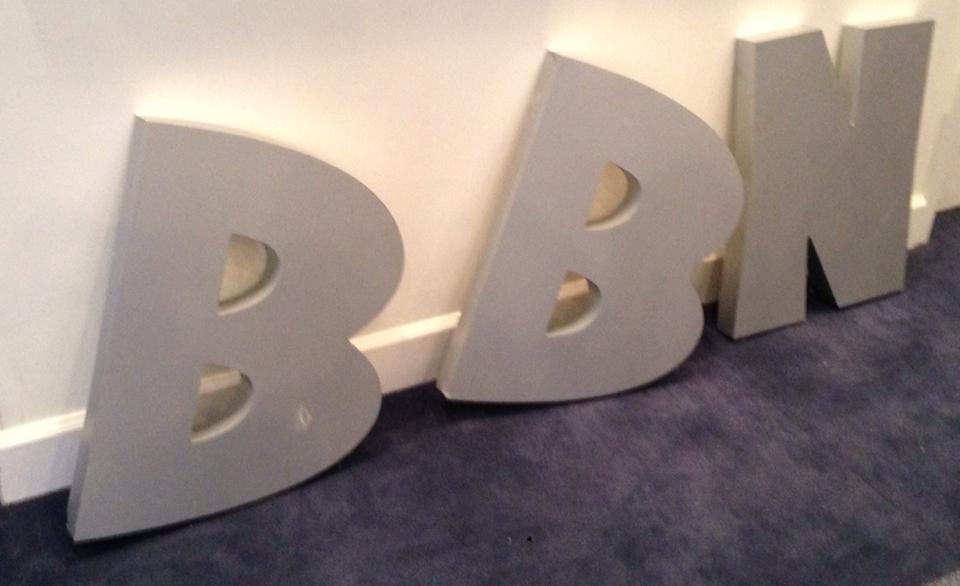
bbn

I attended the University of Kentucky.  I am a proud alum, with two degrees no less.  I was born and raised and have lived my entire life in Kentucky.  Of course, I am also a lifelong fan of UK basketball.  Attending UK–even graduating–has nothing to do with that.  There are 3 million people in Kentucky, most of whom did not attend UK.  But, I’m willing to bet that the majority of those folks are also fans.  We’re born into it.  It doesn’t matter is you’ve never set foot on campus or even been to Lexington, you’re still a fan.

I don’t claim that we are unique.  Alabama football, Indiana basketball and other sports teams have similar followings.  Nevertheless, we have our lifestyle and our own way of viewing the world through a Big Blue prism.

We say our favorite time of year is the NCAA Tournament, though most of us approach each game with a mixture of excitement and fear.  To win would be the greatest of all things, while losing is a dagger in the chest.  The season ends.

We call ourselves part of Big Blue Nation.  You may be a member.  If not, you may encounter our people over the next few weeks at tournament venues, on message boards or just on the street.  You’ve been warned.

THE FELLOWSHIP OF THE MISERABLE

Any UK fan worth his or her salt knows that “the Fellowship of the Miserable” was coined not in relation to basketball, but by Bill Curry, our wildly unsuccessful football coach in the 1990’s.  This was his description of fans who complained to about our perpetually under-achieving football program.  The Fellowship was actually founded by our basketball fans, of course.

The Fellowship is at work, home, church, everywhere you go.  They speak of zones, defending the three, substitution patterns, timeouts, free throws, inbounds plays, recruiting.  And they never forget.  Here are sure-fire topics to stir the Fellowship at tournament time:

  • 2013 NIT:  We were the defending NCAA Champs and went to the NIT.  And lost.  In the first round.  To Robert Morris.
  • 1996 NCAA Champs: Why, oh why, did the Cats lose the SEC Tournament Championship game that year?  Was Pitino flat out-coached or did he tank the game in an act of genius? Oh, and our uniforms were ugly.
  • 1978 NCAA Champs:  When Joe Hall benched the starters in the second half against Florida State, was he a master motivator or was it the act of a madman? By the way, he almost blew the lead in the finals.
  • 1992 Duke game:  For the love of God, why didn’t Pitino put a man on the freaking ball ?  Regardless, Christian Laettner stomped on Aminu Timberlake!!  He shouldn’t haven’t been in the game at the end anyway.
  • 1975 NCAA Finals:  John Wooden announced his retirement before the 1975 Championship game just to screw UK. Wooden, by the way, was just as big a cheater as any of our coaches.
  • 1998 NCAA Champs:  Tubby Smith won with Pitino’s players.
  • 1966 NCAA Runners-up:  UK may have had an all-white team in 1966, but so did DUKE, by God!  Where is your outrage over THAT???
  • Middle Tennessee and Alabama-Birmingham:  Just ask any member of the Fellowship what is significant about those schools.  You’ll get an earful.
  • 1997 NCAA Runners-up:  If Derek Anderson was well enough to shoot a couple of free throws, he should have played.
  • 1984 Final Four:  Say “Seattle” or “Georgetown” or “2nd half” and watch the life drain from the faces of the Fellowship.
  • 1986 NCAA Tournament:  By God, you can’t beat any team FOUR TIMES in one season!

This is but a sampling of hot buttons for the BBN.  You can throw names out there, too:  Denny Crum, Dale Brown, Coach K, Bobby Knight, Dean Smith, John Wooden, Billy Gillispie.  The list is endless.  One mention will dredge up memories best left suppressed, like tearing open an old incision.

WE CAN ALL COACH

I am a typical member of BBN.  I never played basketball at any seriously competitive level.  But, I’ve watched a lot of basketball.  A lot.  This makes me an expert, of sorts.  If I were the coach…..  You know the drill.  Every fan is different, but here are a number of coaching pointers about which there is a general consensus in BBN:

  • Full court press:  Full court, all the time.  We like this because it was effective under Rick Pitino, even though Pitino himself no longer employs it.  Because we rarely watch any team other than UK, we don’t know this.  We think Louisville presses all the time.  We want to do that, too.
  • Dribble Drive Motion:  This is the offense of choice of our current coach, John Calipari.  Few of us understand how it works.  We scream at the TV for pick and rolls and screens when they aren’t even part of our offense.  Here’s a link about the DDM which will confuse you to no end, making it only slightly less complex than string theory.
  • One and Done:  We hate the “One and Done” rule.  It doesn’t work.  We can’t win with freshmen.  Until we do….
  • Shoot the 3:  Pitino’s first team at UK made us 3 crazy.  We’ve never recovered.  Many of us still hold to the idea that firing the ball from 20 feet makes more sense than a lay up.
  • The Ball Line Defense:  This was Tubby Smith’s defense.  We think he invented it.  It’s also known as “man-you-ball” defense.  The basic principle is to position yourself between your man and the ball.  It based on the oldest defensive principle: The hardest man to guard is the one with the ball, so keep the ball away from your man.  It’s actually a good defense and was played well by Smith’s teams.  We don’t care, because those teams didn’t win enough.  We think it was a terrible defense.
  • Play Richie:  We know who should be playing and when.  We know that many games would have been won if only the 10th or 11th player had logged some minutes.
  • We Need More Kentucky Boys:  Not everything about BBN is admirable.  You will hear some fans say “we need more Kentucky boys.”  This is usually offered as a pretense to contend that Kentucky boys will play harder.  Sadly, this is often a thinly-veiled code for “white boys.”  Don’t be fooled.  When you hear this, that’s often what it means.

THE SOUTHEASTERN CONFERENCE

Kentucky belongs to the SEC or, as we prefer to put it, the SEC belongs to Kentucky.  The SEC hates Kentucky, but not as much as the BBN hates the SEC.  The other SEC schools waste their efforts on football or–in Vanderbilt’s case–academics.  We’re all basketball all the time.  A quick overview of our take on the rest of the conference:

  • Alabama:  A football school pretending to play basketball and doing a poor job of it.
  • Auburn:  See Alabama.  Plus, we made Charles Barkley cry.  Tigers, War Eagles of Plainsmen?  No self-respecting school can be that confused on its mascot choice.
  • Arkansas:  Okay, they won a title. Big deal.  Their coach also said he would crawl to Kentucky for the UK job.  He didn’t, but he did kind of crawl out of town when he got fired.
  • Florida:  They won back to back titles.  Pure luck.  Any school that had both Dwayne Schintzius and Joakim Noah is worthy of nothing but contempt.
  • Georgia:  Their coach also abandoned them to come to Kentucky. Otherwise, we don’t know much about them, other than we regularly beat them.
  • LSU:  Cats came back from 31 down AT LSU on Fat Tuesday.  HAHAHAHA!
  • Mississippi:   We get them confused with Mississippi State.
  • Mississippi State:  See Mississippi.  They used to be called the “Maroons.”  WTH?  Somehow, they get credit for “crossing the color line” by participating in the integrated NCAA Tournament in 1963, twenty freakin’ years after UK started going to the tournament!
  • Missouri:  They have to be known for something, but what I have no idea what.
  • South Carolina:  They’re called the Gamecocks.  Nuff said.
  • Tennessee:  One time Ernie Grunfeld shot free throws when Bernard King got fouled.  They are cheaters.  Plus, their women’s team could beat them most years.
  • Texas A&M:  Another football school but without any particular football success.  Like UK, Bear Bryant quit them, too.  Their school concentrates on agricultural and mechanical stuff which seems kind of limited to me.
  • Vanderbilt:  Eggheads with a disproportionate number of white players.  They play in a dump with the benches at the end of the court.

LOUISVILLE

We hate Louisville, the University, that is.  The city actually has more UK fans in it than anywhere else in the state. HAHAHAHA!!

CONSPIRACIES

Oswald acted alone.  Marilyn Monroe overdosed.  Obama was born in Hawaii.  Those statements sum up my view of conspiracies.  I don’t believe it is possible for two people to keep a secret, much less dozens; however, as a member of BBN, I do recognize the following undeniable conspiracies:

  • The NCAA Tournament Selection Committee is designed primarily to give UK an impossible draw every year.  That’s why they don’t have cameras in the room.
  • The NCAA Infractions Committee has conspired against UK many times to impose unjust sanctions.  They have gone so far as to enlist the media, FedEx and the American College Testing system.
  • The print media conspires against UK by failing to acknowledge our superiority.  They also engage in yellow journalism by unjustly criticizing the Cats.
  • Broadcasters conspire against UK to offer undue criticism of the Cats and unwarranted praise of our opponents.  Only Dick Vitale does not belong to the conspiracy and that’s only because he’s so annoying they won’t invite him to their secret meetings.
  • Referees since the days of Paul Galvan have conspired against UK every season.  We know that they meet before each season to discuss how to hold back UK.  They demand that games be kept close for TV ratings and to boost up the rest of the sorry SEC.  This is the only thing that keeps the Cats from regularly winning by 75 points.

PERSPECTIVE

Like any good fan base, BBN lacks perspective.  I myself have smashed an ashtray (1992); broken a baseball bat (1993); ripped a pair of blue jeans in half (1995); and kicked a hole in the wall (1994).  These were just reactions to NCAA tournament losses.  There have been countless of other instances of temporary insanity, property damage and self-inflicted physical injury caused by a bitter defeat.

bbn3

Your author reflects in the glory of the accomplishments of others.

We are the same fan base from which a caller told Coach Smith that he hadn’t “given up” on the Cats, even though they were 22-3 at the time.  People who camp out for weeks to attend a practice.  We hate Christian Laettner for doing what anyone would expect him to do–make a shot to win the game for his team.  We don’t care.  He beat the Cats, and we hate him.  Coach Calipari won the title in 2012, and two years later we were ready to brand him a complete failure, then he took his team to another Final Four.  He was a genius again.

Two kinds of seasons end with a win:  Wildly successful (NCAA Champs!) or soul-crushing failure (no tournament, NIT champs, probation).  This means that we are despondent at the end of almost every season.  We won’t read the newspaper or watch the news, lest there be a report on our humiliating loss.  We are lesser people, and we know it.  We have no hope…until NEXT YEAR!!

©www.thetrivialtroll.com 2014